Why Is Indian Furniture Famous Around the World? The Craft, the Wood, the Legacy
Why Is Indian Furniture Famous? Craft, Wood & Legacy Explained
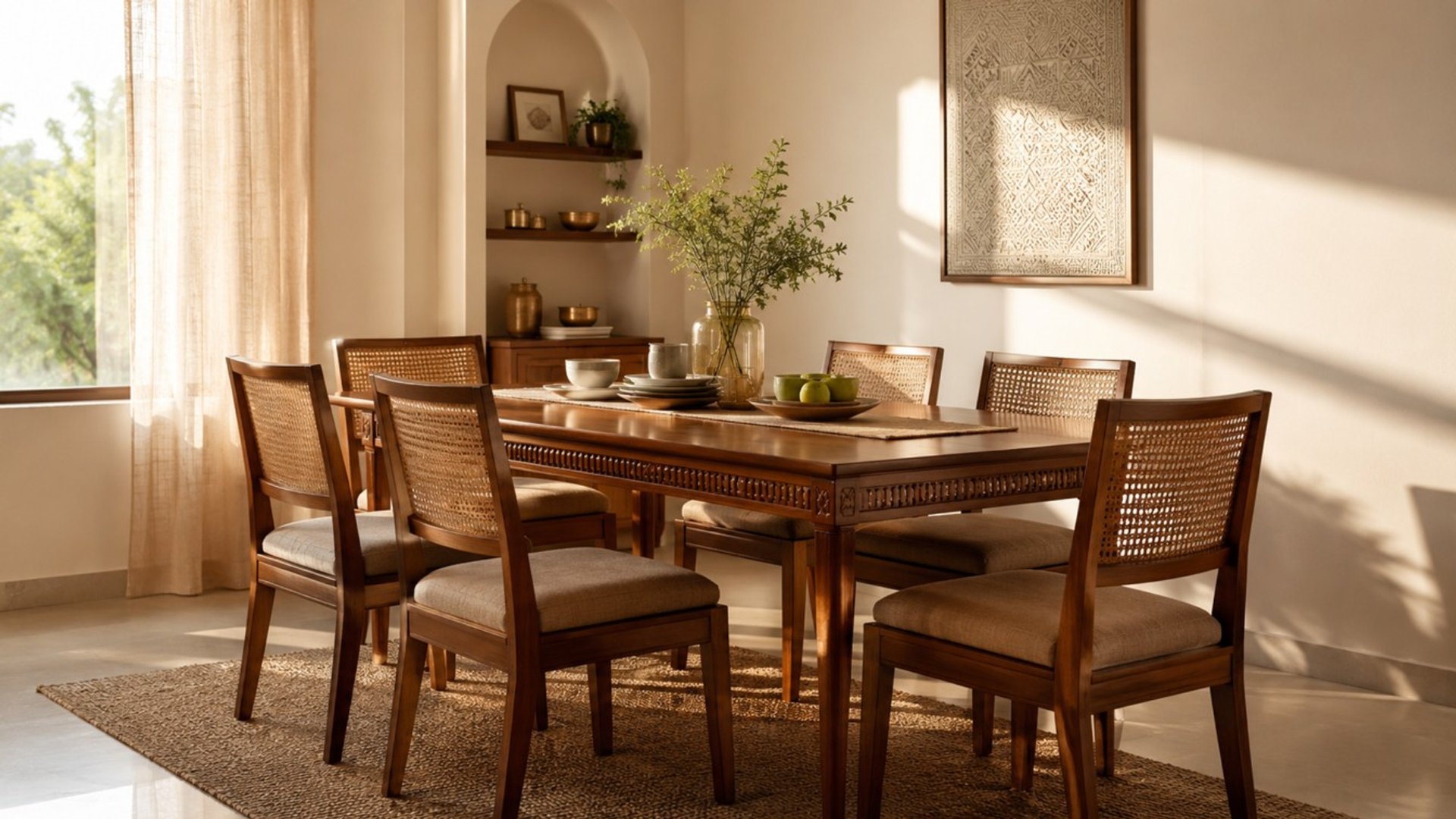
There is a reason Indian furniture keeps showing up in some of the most thoughtfully designed homes around the world.
Not because it follows trends or because it is marketed as luxury. But because it carries something many modern pieces have lost along the way: a sense of origin.
A dining table from a workshop in Jodhpur. A hand-carved cabinet shaped using techniques passed down through generations. A teakwood chair that develops more character with every passing year. The answer to why Indian furniture is famous has never been about one thing. It is the coming together of craftsmanship, material honesty, cultural heritage, and an understanding that furniture should be built to live with, not merely look at.
Long before the world started talking about sustainability, provenance, and slow design, Indian makers were already practising them.
Table of Contents
- The Global Appeal of Indian Furniture Craftsmanship
- The Role of Solid Wood in Long-Lasting Furniture Design
- Traditional Craft Techniques That Define Indian Artistry
- How Cultural Heritage Shapes Furniture Aesthetics in India
- The Rise of Sustainable and Eco-Conscious Furniture Choices
- Why Handcrafted Furniture Holds More Value Than Mass Production
- Blending Traditional Indian Design with Modern Global Interiors
- What Makes Indian Furniture a Preferred Choice for Luxury Buyers
- How Casa Carigar Brings Indian Craftsmanship to a Global Audience
- Conclusion
The Global Appeal of Indian Furniture Craftsmanship
Most industries spend decades trying to build trust.
Indian furniture inherited it.
Across the country, workshops continue to practise techniques that have travelled through generations. Not through textbooks or training manuals, but through observation, repetition, and years spent refining a craft.
This depth is what gives Indian furniture craftsmanship its reputation. Every region brings its own material knowledge, design language, and making tradition. The result is furniture that feels personal rather than manufactured.
And in a world increasingly filled with sameness, that distinction matters.
The Role of Solid Wood in Long-Lasting Furniture Design
Spend enough time around well-made furniture and one thing becomes obvious.
Good materials age differently.
Many examples of handcrafted wooden furniture from India are built using:
- Teak
- Rosewood
- Oak
- Ash wood
- Other durable hardwoods
These materials do not simply survive decades of use. They often improve because of it.
Among the many solid wood furniture benefits, longevity may be the most important. Grain becomes richer, surfaces develop patina, and small signs of use become part of the story rather than signs of decline.
The Studio Grain takes this further than most. Their FSC-Certified Himalayan Teak and Reclaimed Palace Hardwoods initiative salvages and stabilises centuries-old antique teak logs from historic palaces in Jodhpur. The Kari Wall Shelf is a precise example of what happens when a material carries genuine historical memory into a contemporary room.
AKFD Studio takes a different but equally honest approach. Rather than masking the native character of Indian timbers like Acacia, Mango, and Shisham, they highlight natural grain variations and colour depths as features, not flaws.
Traditional Craft Techniques That Define Indian Artistry
The beauty of Indian furniture often lies in the details that take the longest to create.
Many Indian furniture workshops still rely on skills that have changed very little over centuries:
- Intricate lattice work
- Hand carving
- Traditional joinery
- Inlay techniques that require extraordinary patience
The tools may evolve, but the knowledge remains remarkably consistent.
Arjunvir Gujral Design Studio demonstrates this with world-class precision. Their Tambour Bar Unit perfects Master Slatted Cabinetry by bonding precise wood slats to a flexible canvas mesh so rigid wood can glide effortlessly around curved corners. It is engineering that looks like magic.
b.form studio works at the intersection of mathematics and material. Their Gom Coffee Table uses Mathematical Wood Intarsia, precisely carving and levelling contrasting wood blocks flush into solid teak frames to generate integrated geometric patterns alongside softly undulating hand-carved rims.
For deep regional heritage, Indune represents Rajasthani craft at its most specific: Mewar hand-painting applied to wooden jharokhas, and embossed brass metal sheet work tacked over polished wooden cores.
You can often see the difference immediately. Not because it is louder, but because it feels considered.
How Cultural Heritage Shapes Furniture Aesthetics in India
Furniture rarely exists in isolation.
It reflects the architecture, history, and culture around it.
Many traditional Indian furniture styles borrow from royal courts, regional architecture, and local craft traditions. Arched silhouettes, carved motifs, and intricate detailing all carry traces of the places where they originated.
Understanding how that vocabulary evolved matters. The blog How India's 1930s Architecture Influenced Modern Furniture traces exactly this, showing how historical design language translated into the contemporary forms that now travel so confidently into global interiors.
This is what makes heritage furniture from India so compelling. It brings history into contemporary spaces without feeling trapped in the past.
The Rise of Sustainable and Eco-Conscious Furniture Choices
For years, sustainability was treated as a trend.
For many Indian workshops, it was simply how things were done.
Today's demand for sustainable furniture reflects a growing appreciation for thoughtful production:
- Smaller batches
- Natural materials
- Repairable construction
- Long product lifecycles
The Garden Room makes this tangible. Their Sleeper Wood Reclamation programme repurposes seasoned, dense timber from discarded Indian railway track sleepers to build heavily weathered, eco-friendly garden furniture. The Refolo Lounge Set is the clearest argument they make: that circularity and beauty are not a compromise.
The most sustainable piece is often the one that stays in your home for decades.
Why Handcrafted Furniture Holds More Value Than Mass Production
There is a noticeable difference between something made quickly and something made carefully.
Mass production prioritises efficiency.
Craftsmanship prioritises judgement.
A skilled artisan notices grain direction, material behaviour, and structural balance in ways that machines cannot. These decisions may be invisible at first glance, but they reveal themselves over time.
The Casa Carigar editorial piece The Artisan's Signature You Didn't Notice makes this argument quietly but precisely. The unsung authorship in every hand-made piece, the manual patience, the quiet marks left by the maker: these are not incidental. They are the point.
That is why luxury handcrafted furniture from India continues to appeal to homeowners, designers, and collectors seeking more than convenience.
Blending Traditional Indian Design with Modern Global Interiors
One of the reasons Indian furniture travels so well is its adaptability.
A carved teak console can sit comfortably in a contemporary apartment overlooking Manhattan. A woven cane chair feels equally at home in Bengaluru, Singapore, or London.
The most interesting interiors rarely choose between old and new.
They allow both to exist together.
Taro Collective operates directly in this space, working between Bengaluru and Milan to re-engineer historic frames into agile, flat-pack architectures using premium materials. The result is what they call an intentional harmony of Italian sensibilities and Indian production.
AKFD Studio has earned the same recognition on a global stage, with their reframing of local artisanry validated through EDIDA honours and showcases at Salone del Mobile. The Studio Grain has drawn critical attention at the ICFF in New York, where their Himalayan materiality meets cosmopolitan sophistication ethos found an audience that understood exactly what was being offered.
Indian craftsmanship has always been remarkably good at bridging that gap.
What Makes Indian Furniture a Preferred Choice for Luxury Buyers
Luxury has changed.
For many buyers today, it is no longer about logos or labels.
It is about knowing where something came from.
The growing appeal of Indian artisanal home decor reflects this shift. Buyers want provenance. They want to know who made the piece, what materials were used, and what tradition stands behind it.
The Casa Carigar manifesto holds this idea at its centre: that the way a piece was made in 1971 should still be the way it is made now, and that Indian craft does not need archaic preservation, but rather the advanced systems to reach the people who will value it most.
The story is not added afterwards.
It is built into the object itself.
How Casa Carigar Brings Indian Craftsmanship to a Global Audience
Every maker on Casa Carigar is curated by invitation. Every material is specified with transparency. Every piece is sourced with accountability from the workshop to the room.
The platform does not simply showcase craft. It builds the systems that allow great craftsmanship to be discovered, specified, and lived with, by architects, designers, and design-conscious homeowners who know the difference between something made and something manufactured.
When a piece arrives knowing exactly who made it, what wood was used, which hands shaped it, and what tradition it carries, it stops being furniture.
It becomes the kind of object a room is built around.
Explore the full collection at Casa Carigar.
Conclusion
The global reputation of Indian furniture was never built overnight.
It was built through generations of makers who understood wood, respected materials, and perfected their craft long before the world began celebrating handmade design again.
The techniques endure. The materials age beautifully. The stories travel with every piece.
Perhaps that is the real answer to why Indian furniture remains admired around the world.
It was never just furniture.
It was always legacy.
FAQs
Why Is Indian Furniture Considered High Quality?
Indian furniture is known for its skilled craftsmanship, durable hardwoods, traditional making techniques, and attention to detail. Many workshops continue to use methods refined over generations, resulting in furniture built to last.
What Types of Wood Are Commonly Used in Indian Furniture?
Some of the most common types of wood used in Indian furniture include:
- Teak
- Rosewood
- Ash wood
- Oak
- Mango wood
- Sheesham
Each offers unique grain patterns, durability, and character.
Is Handcrafted Furniture Better Than Machine-Made Furniture?
Handcrafted furniture often offers stronger construction, better material selection, and greater individuality. It reflects the expertise of the maker rather than the limitations of a production line.
What Makes Traditional Indian Furniture Unique Compared to Modern Designs?
Traditional Indian furniture combines regional craftsmanship, cultural heritage, intricate detailing, and natural materials. These elements create pieces that feel timeless while carrying a strong sense of place and history.
Casa Carigar
From the Casa Carigar workshop