Where Indian Furniture Is Made: A Guide to the Country's Craft Clusters
Furniture Manufacturing Hubs in India: Craft Clusters to Know
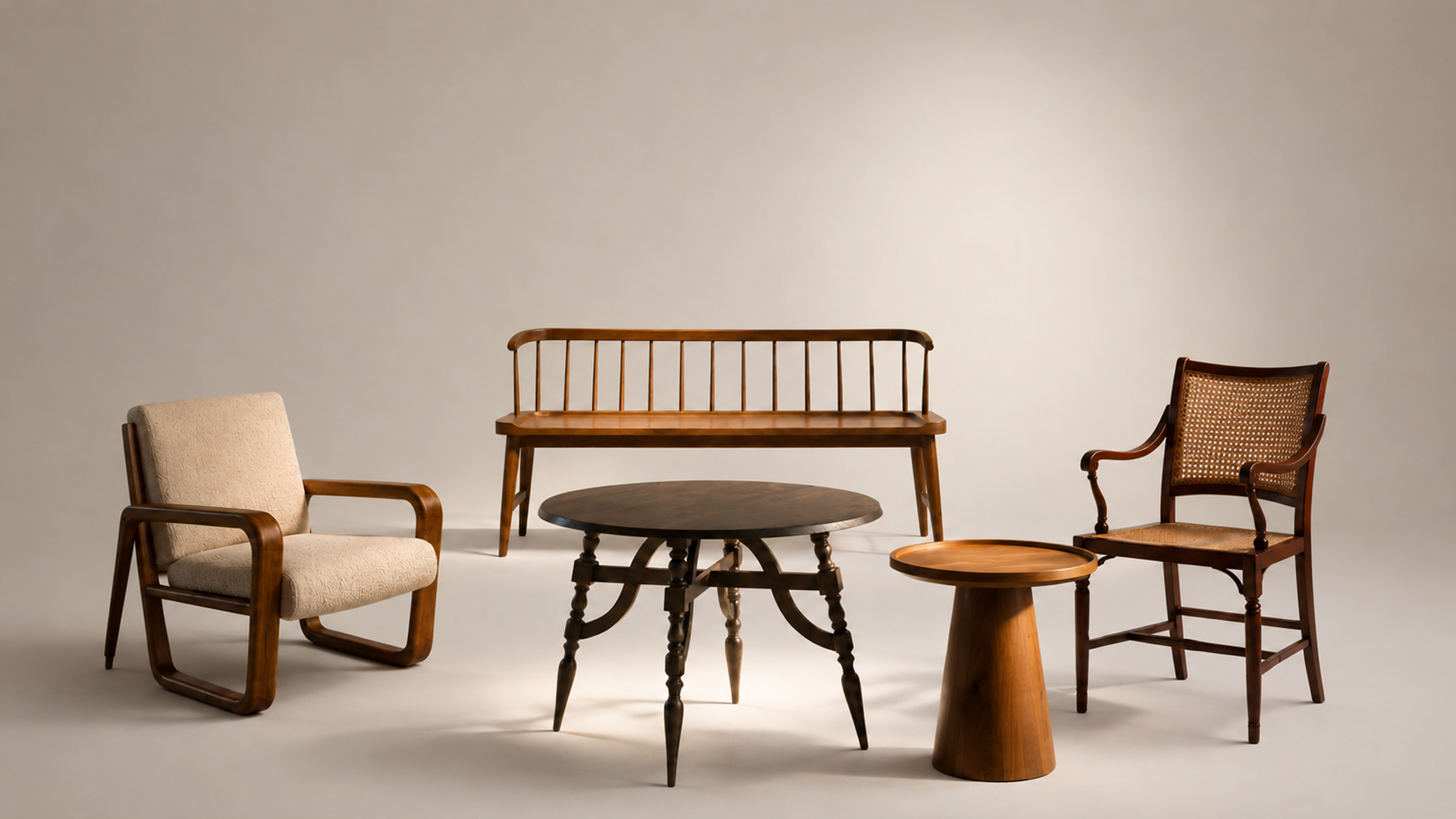
Ask where a piece of furniture comes from, and most people will name a country. Ask a maker the same question, and they will name a district.
That is the difference this piece is about.
India does not have one furniture manufacturing hub in India. It has many.
Each one is shaped by geography, by the wood or metal that grows or gets mined nearby, and by generations of hands that never stopped working.
This is the map of those places, and why the region still matters more than the retailer.
Why Furniture Craft Clusters Matter in India
A cluster is not just a location. It is an ecosystem.
- A timber merchant who knows which log will warp and which won't
- A carver whose grandfather trained under the same roof
- A finishing workshop two streets away that has perfected one specific patina
This density of skill is why Indian furniture manufacturing hubs produce work that a single factory never could.
No one workshop holds the whole chain. The cluster does. At Casa Carigar, sourcing follows this logic exactly: solid teak from Mysuru, brass from Moradabad, cane from Coimbatore, because the region is often the reason the piece is good in the first place.
It is a belief the platform holds plainly: the way a piece was made decades ago should still be the way it is made now.
Jodhpur: The Heart of India's Wooden Furniture Industry
Jodhpur earned its name through sheer volume of skilled joinery, sheesham woodworking passed through family workshops, and a finishing tradition that ages a piece rather than disguising it. The blue city's furniture trade grew around export demand, but the underlying craft hand-cut joints, distressed finishes, iron detailing predates any container ship.
Saharanpur: A Legacy of Intricate Wood Carving
Few places carry the title of India's woodcarving capital as fairly as Saharanpur. This is where carving clusters have operated across generations, and where the fine detail work, floral motifs, latticework, and deep relief carving still happens almost entirely by hand. Chaukhat works within this network, pairing Saharanpur's carving tradition with contemporary wire and metal structures, closing what has long been a gap between artisan skill and export-ready design.
Kashmir: Traditional Woodcraft and Fine Carving
Kashmiri woodwork carries a different rhythm altogether. Walnut wood carving here is dense, patient, and almost architectural in its detail, a legacy of centuries spent carving for palaces, mosques, and homes built to last winters. The technique has barely changed. It didn't need to.
Kerala: Woodworking Shaped by Architecture and Tradition
Kerala's furniture tradition grew out of its buildings before it grew out of its workshops. Rosewood and teak carpentry here borrowed directly from temple and tharavad architecture, pillared structures, deep grain exposure, joinery built for humidity rather than against it. The furniture is, in many ways, architecture scaled down.
Rajasthan: Furniture Making Rooted in Royal Craft
Beyond Jodhpur, Rajasthan's furniture traditions run through Jaipur and Udaipur, where royal patronage once shaped the very techniques still practised today.
- Anantaya works out of Jaipur, reviving the 4,000-year-old Dhokra lost-wax casting method and hand-painting Kalamkari motifs directly onto solid wood tabletops
- AKFD Studio also builds from Jaipur, reframing Rajasthani artisanry through native timbers like acacia, mango, and shisham
- Udaipur's Fair Trade-verified workshops apply Mewar hand-painting to wooden jharokhas and hand-hammered brass sheet work over solid cores
- Cocoon Fine Rugs roots its design and yarn work in Vaishali Nagar, Jaipur, even while serving homes well beyond it
This is provenance as proof, not decoration. Each piece can be traced back to a street, a workshop, a family name. Read more on how a single maker's hand shows up in the artisan's signature you didn't notice.
Punjab and Gujarat: Distinct Regional Furniture Traditions
Punjab's furniture regions built their reputation on sturdy, functional woodworking, sheesham and mango wood pieces made for daily use rather than display. Gujarat's clusters lean differently, with lacquer work, mirror inlay, and painted furniture traditions that carry a more ornamental, folk character. Neither imitates the other. Regional furniture traditions in India rarely do.
How Craft Clusters Support Indian Artisans and Local Economies
These clusters are livelihoods, not just supply chains.
- They keep specialised techniques alive by giving them daily, paid practice
- They allow skill to pass within families rather than being taught from scratch each generation
- They create local employment that does not depend on migration to a city
- They protect against a very real risk, a technique with no market simply stops being taught
Bhadohi in Uttar Pradesh shows this clearly. The Ambiente is built on this weaving hub's foundation, and its social weaver empowerment work ensures fair compensation reaches the women who hand-knot rugs across North Indian craft networks.
What Makes Furniture From Different Indian Regions Unique
No two clusters solve the same design problem the same way.
- Jodhpur distresses and finishes for character
- Saharanpur and Kashmir carve for detail and permanence
- Kerala builds for humidity and architectural proportion
- Jaipur and Udaipur paint, cast, and inlay for ornament and story
- Moradabad forges metal by hand rather than casting it flat
3200 BC works this metal tradition out of Moradabad, hand-forging accents through chemical and thermal antiquing in small, restricted batches. Chaukhat also draws on the same city's metalsmiths for hand-welded iron and brass skeletons. This is the difference between a region and a style guide. The region decides what the piece can even become.
How Casa Carigar Works With India's Craft Heritage
None of this is sourced from a catalogue. It is sourced from the cluster itself, the workshop, the family, the technique that took decades to earn. Every maker on the platform is curated by invitation, audited for material honesty, and credited by name and location. This is Casa Carigar's manifesto in practice, not as a tagline but as a sourcing discipline that treats the region as the credential.
Conclusion
A piece of furniture is never really from a country. It is from a district, a workshop, a set of hands trained by another set of hands before them. Knowing the cluster is knowing the object. Everything else is just where it happens to sit in your home.
FAQs
Which city is famous for furniture manufacturing in India?
Jodhpur is widely regarded as India's largest and most established furniture manufacturing hub, known for sheesham woodworking and hand-finished joinery.
Which place is famous for wooden furniture in India?
Saharanpur holds that reputation most strongly, recognised as the country's woodcarving capital with generations of carving families still working today.
Where is most furniture made in India?
Production is spread across several furniture craft clusters, chiefly Jodhpur, Saharanpur, Kashmir, Kerala, and Rajasthan, each specialising in a distinct material and technique.
Which Indian cities are known for traditional furniture making?
Jodhpur, Saharanpur, Jaipur, Udaipur, and parts of Kerala and Punjab are the most established centres for traditional furniture-making regions in India.
Casa Carigar
From the Casa Carigar workshop