The Artisan’s Signature You Didn’t Notice
On quiet marks, chosen materials, and the authorship we overlook
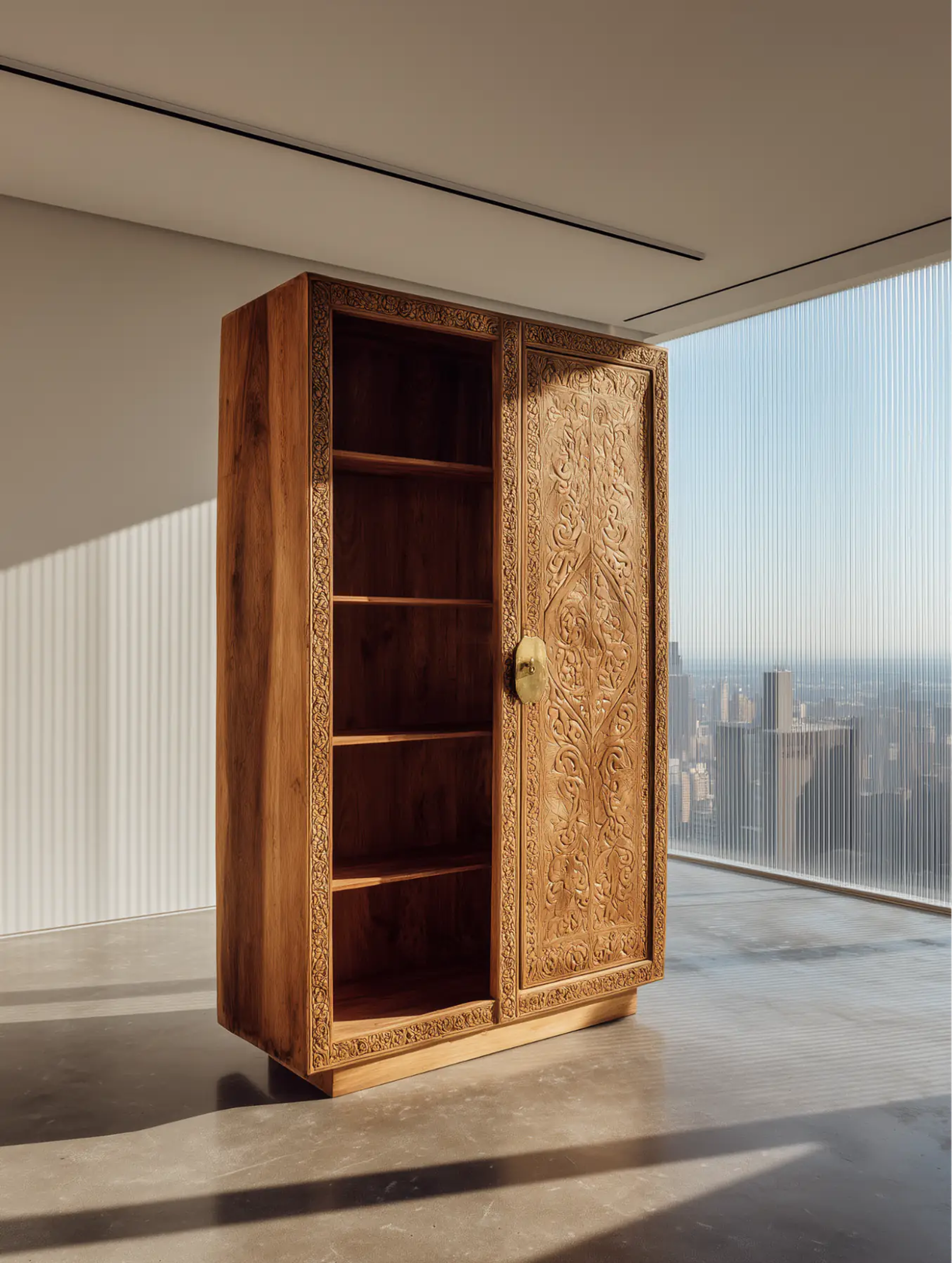
Not all signatures are written.
Some are carved where your hand never goes.
Some are carved where your hand never goes.
Some live in joints, proportions, or a piece of wood chosen for reasons no catalogue will ever explain.
Some exist only so the maker knows when the work is complete.
Furniture has always carried authorship. We’ve simply learned to stop looking for it.
In many Indian workshops, signing a piece - literally writing your name on it - would feel unnecessary, even odd. The work speaks. The object holds. The maker moves on.
Historically, furniture was collective. One person cut the wood, another joined it, someone else finished it. Authorship belonged to the workshop, the lineage, the region - not the individual. To sign was to step outside that system.
So the name disappeared. Or rather, it went underground.
What replaced it were gestures - small, deliberate decisions that only another maker, or a very patient owner, might notice.
In a workshop outside Saharanpur, a mango-wood storage chest looks almost austere from the outside. Flat panels. Soft edges. No ornament. But turn it over and, on the inside of the base panel, there’s a shallow hand-carved paisley. It serves no structural purpose. No one will see it once the chest is in use.
When asked why it’s there, the maker shrugs.
“So I know it’s finished.”
The mark isn’t for you. It never was.
Look closely at furniture that has truly lasted and you’ll often find something slightly irregular. A carving tucked beneath a stretcher. A notch that doesn’t quite match. A detail finished with more care than function demands.
In a teak table made in Jaipur, mortise-and-tenon joints are cut a few millimetres deeper than specified. On paper, it changes nothing. Decades later, as the wood shifts, those joints tighten instead of loosening. The table stays square. Other carpenters recognise the work - not by sight, but by feel.
That extra depth is the maker’s signature. Quiet. Unadvertised. Enduring.
Sometimes, the signature isn’t carved at all. It’s chosen.
In a workshop near Nagpur, a cabinetmaker refuses freshly cut neem, waiting instead for fallen trees. Neem, he believes, offers protection only if it falls on its own. Structurally, the cabinet would be identical either way. The catalogue will simply say “solid neem.”
The meaning remains embedded, not explained.
Material choice, in Indian craft traditions, is rarely neutral. Teak for endurance. Sheesham for warmth. Cane for breathability. These are inherited decisions, carrying memory, belief, and place.
Why hide these signatures?
Partly humility. The work is meant to serve.
Partly protection. In regions shaped by extraction and imitation, withholding becomes agency.
In Kutch, a family of charpai makers builds beds that appear identical except one leg is always fractionally slimmer. A perfectly symmetrical object, the eldest maker says, invites arrogance. A small imbalance keeps the maker - and the object - human.
Most people never notice. Those who do tend to keep the charpai longer.
Industrial furniture left no room for this. Uniformity replaced variation. Branding replaced the hand. We learned to trust labels more than joints.
A drawer from a Pondicherry workshop closes with a gentle pause. No hardware. Just runners finished to slow the motion. The maker believes drawers shouldn’t slam. The object teaches your hand to be gentler.
To notice these signatures, you have to slow down. Look underneath. Pay attention to where time was spent even when efficiency would say stop.
In Haryana, women weave charpai surfaces tighter than comfort requires. Over time, the rope loosens to the user’s body. The bed doesn’t soften on its own. It responds.
That calibration is a signature you feel, not see.
As furniture reaches wider audiences, these quiet decisions risk disappearing under scale. Good systems don’t flatten craft. They protect it. They allow intelligence to remain embedded in the work.
Live with a piece long enough and the signatures surface. A table edge that feels right. A chair that creaks familiarly. A joint that holds without asking attention.
These are not accidents. They are cared for, accumulated.
The artisan’s signature you didn’t notice was never meant to be found. It wasn’t waiting for credit. It exists because someone believed the work deserved care - even where no one would look.
If you know how to look, the furniture tells you who made it.
Not with a name.
With intention.
Casa Carigar
From the Casa Carigar workshop