How to Choose a Dining Table for an Indian Home
How to Choose a Dining Table: Shape, Base and Material
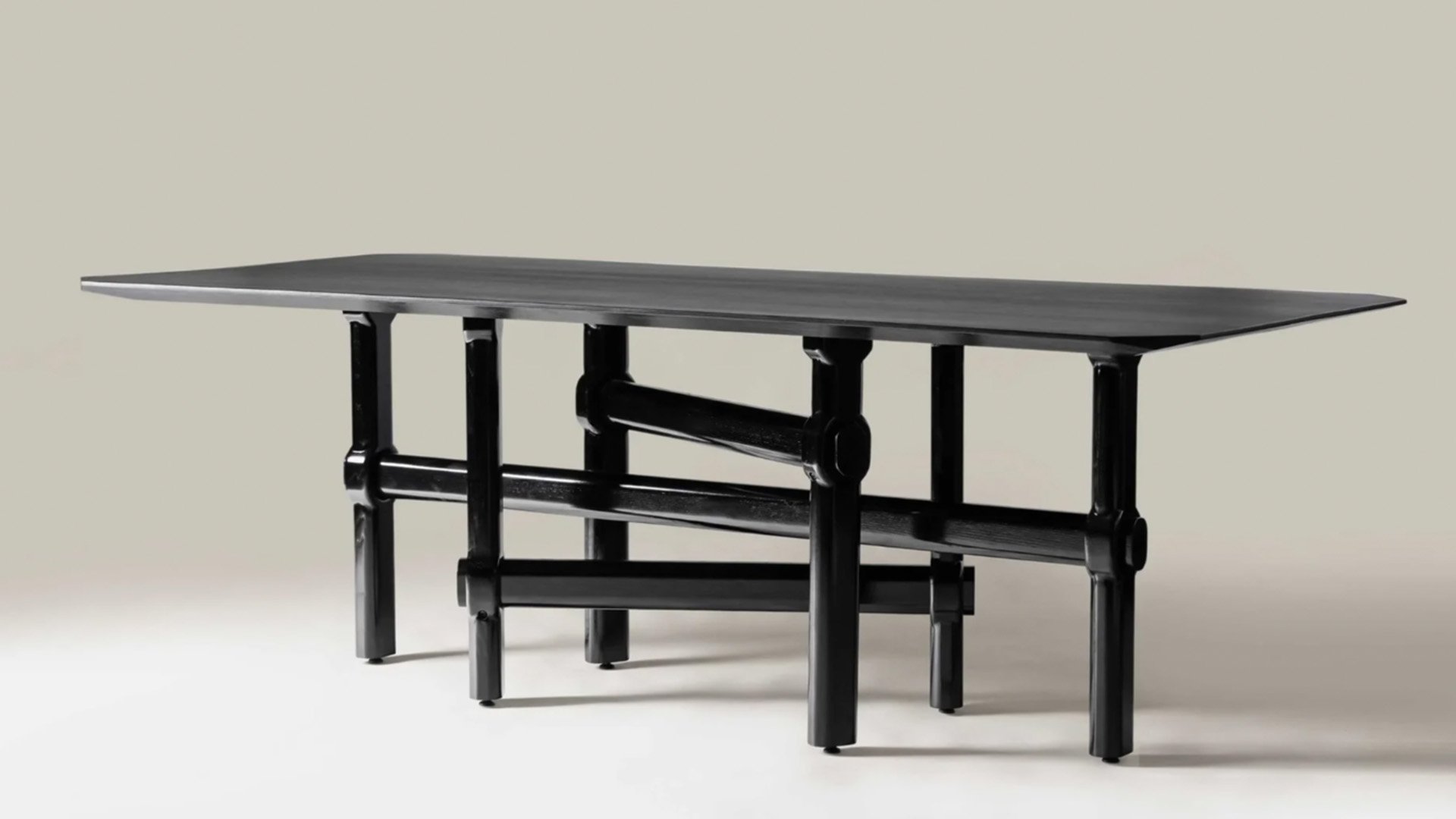
Most people work out how to choose a dining table by looking at photos. Then the table arrives, and the real questions start.
Can six people sit without bumping knees? Will the thalis fit? Does the top crack after one monsoon?
The dining table is the hardest-working piece in an Indian home. Breakfast, homework, office calls, Sunday lunch, festival dinners for twenty. It needs to do all of it.
So here is how to choose a dining table that works every single day, not just in the photo.
Table of contents
- How you actually eat: seating, frequency and room shape
- Shape and what it does to conversation and traffic
- Base design: pedestal, trestle and four leg compared
- Apron depth, knee clearance and where tables fail
- Tops compared: solid wood, stone, glass and engineered boards
- How solid wood tops move in Indian humidity
- Pairing chairs, benches and the space around the table
- How Casa Carigar builds and selects dining tables
- Conclusion
How you actually eat: seating, frequency and room shape
Start with your life, not the catalogue.
How many people eat together every day? How many on a festival night? Do you serve on thalis with katoris, or on single plates?
A dining table for Indian homes has to be wider than most standard guides suggest, because thalis and serving bowls take space. The Casa Carigar furniture sizes guide lays out seating capacity by table size for four, six and eight.
Seating capacity by table size is the first filter. Shape is the second, and that is where a dining table shape guide helps. Size for your everyday number, then plan for the festival number with benches or extendable dining tables.
That is step one in how to choose a dining table.
Shape and what it does to conversation and traffic
Here is a quick dining table shape guide.
→ Round. Everyone can reach the dal. Great for square rooms and four to six people. AKFD Studio makes circular tables that soften a compact dining zone. → Rectangular.
The most flexible. Best for long rooms, larger families, and pairing dining chairs and benches. → Oval. The reach of a rectangle, with softer corners for tight walkways. → Square. Intimate for four. Awkward beyond that.
Any dining table shape guide comes back to one thing. Shape decides how people talk and how they move around the table. Get it wrong, and every meal feels cramped.
Shape is where how to choose a dining table becomes personal.
Base design: pedestal, trestle and four leg compared
The pedestal vs four leg base question changes who can sit where.
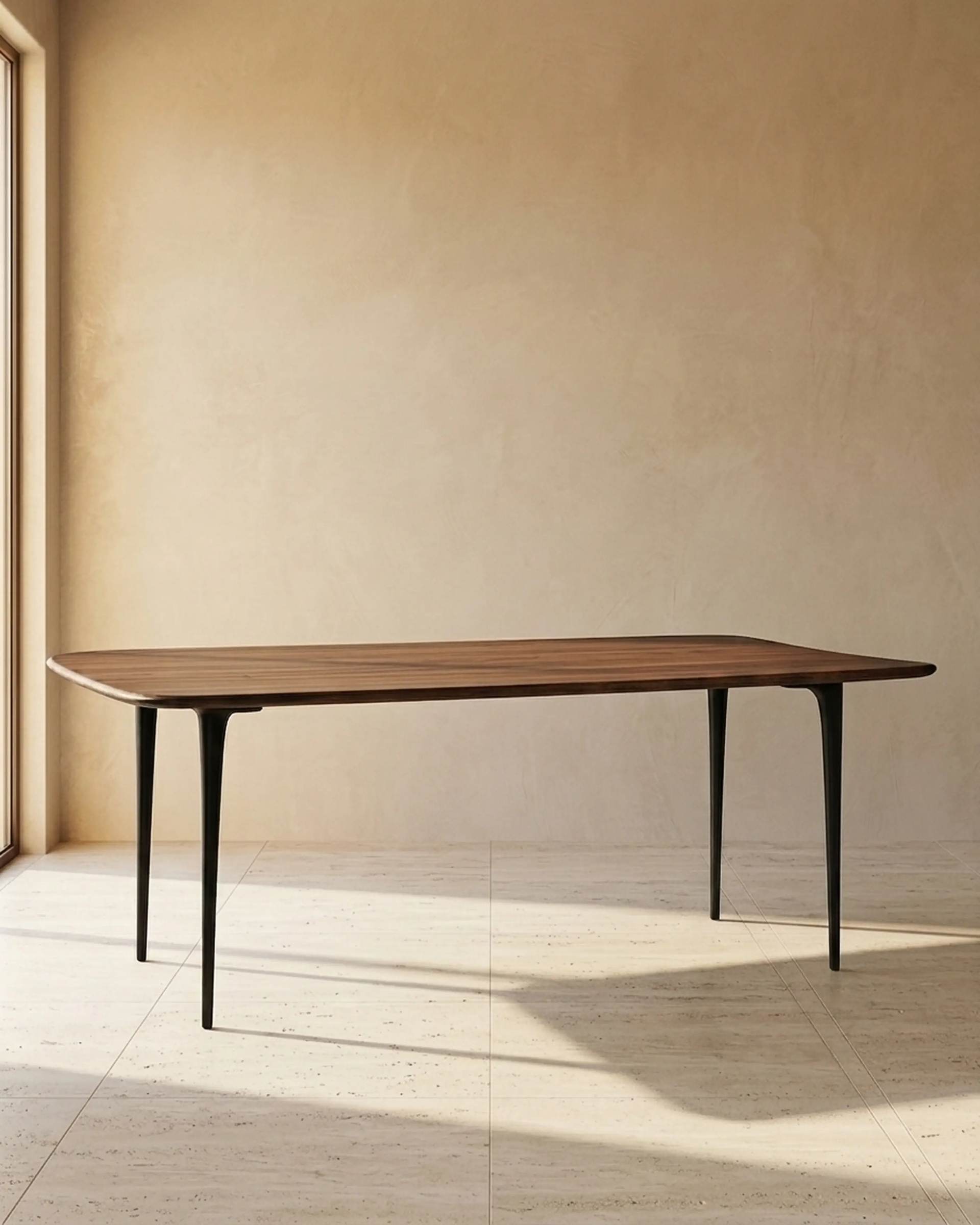
Four leg. Stable and classic. But legs at the corners limit where chairs go.
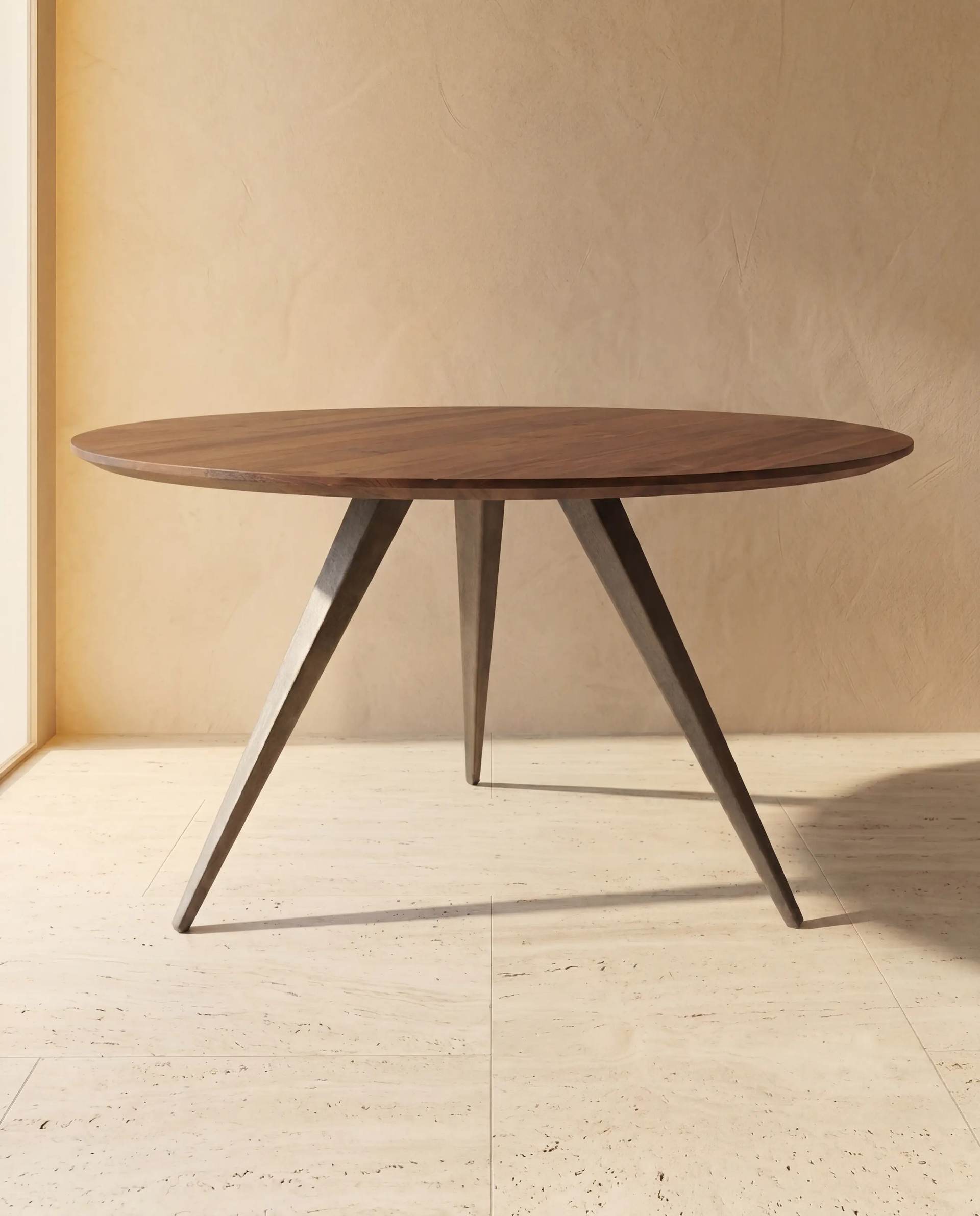
Pedestal. One central support. No legs to bump. Great for round tables and squeezing in an extra chair. It also solves most knee clearance and apron depth problems.
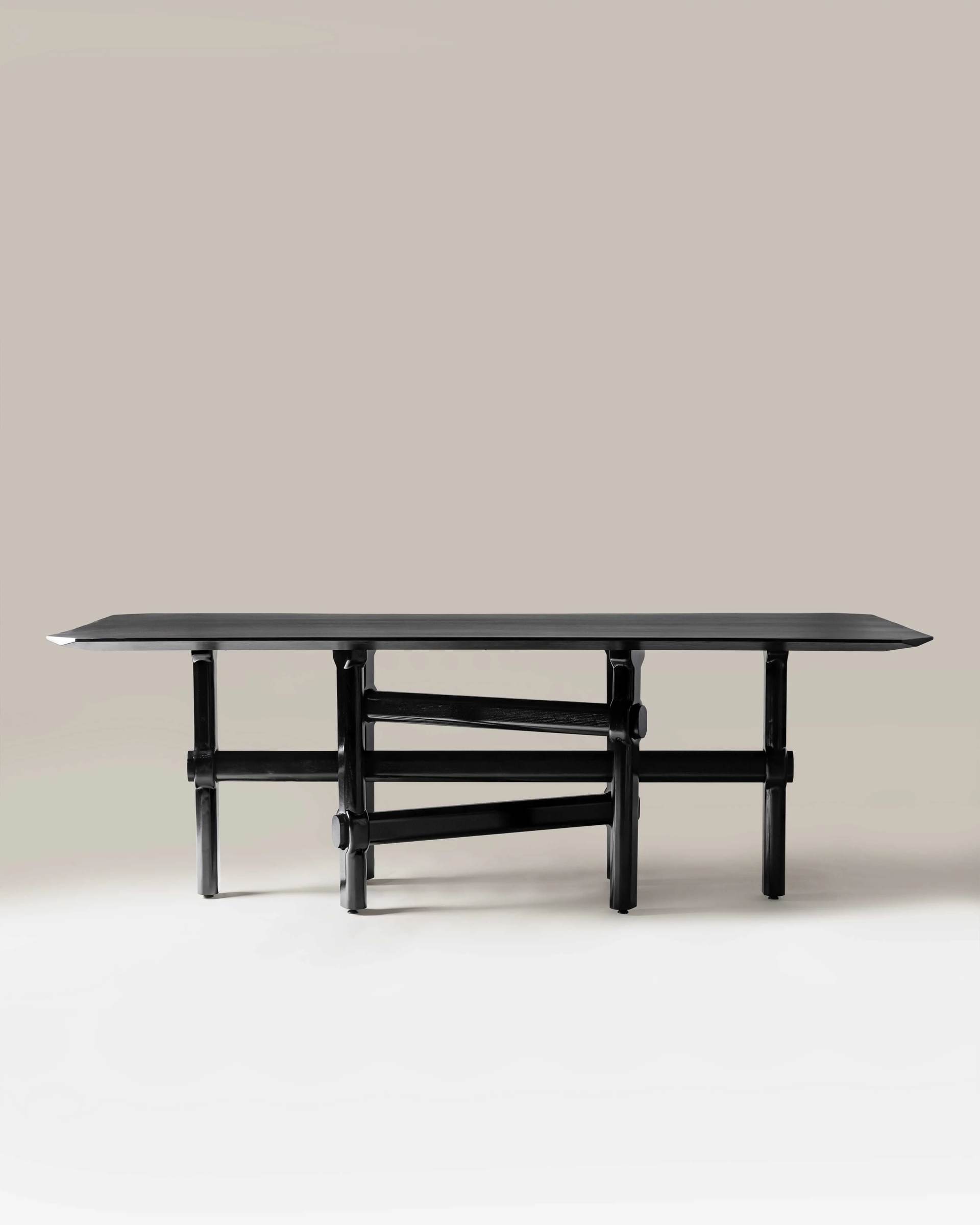
Trestle. Two supports at the ends, joined by a beam. Strong, and good for long tables.
So, pedestal vs four leg base? Pedestal for flexibility and round tops. Four leg for long rectangles that need support at the ends. Get the pedestal vs four leg base choice right, and how to choose a dining table gets much easier.
Apron depth, knee clearance and where tables fail
This is where good-looking tables fail.
The apron is the frame under the top.
Too deep, and your knees hit it every time you sit. Knee clearance and apron depth decide whether a table is comfortable for a two-hour dinner or just for a photo.
Sit at a table before you buy it. Cross your legs. Pull the chair in. If your knees touch wood, walk away.
Knee clearance and apron depth matter even more with armchairs, which need extra space under the top. Few people check this when they learn how to choose a dining table. Everyone notices it later.
Tops compared: solid wood, stone, glass and engineered boards
Material is where how to choose a dining table gets practical. A quick dining table material comparison:
→ Solid wood. Warm, repairable, lasts generations. A solid wood dining table can be sanded and re-oiled.
Teak and sheesham suit Indian homes best, as Casa Carigar's guide to teak vs sheesham explains. The Studio Grain works with exactly this kind of honest timber. → Stone.
Marble and granite are cool and handsome, but heavy, and they stain with turmeric and lemon. → Glass.
Light and easy to clean, but cold, and it shows every fingerprint. → Engineered boards. Cheaper and lighter, but they rarely survive repair.
Any honest dining table material comparison ends in the same place. For daily Indian meals, a solid wood dining table is hard to beat.
Use trivets for hot cookers and turmeric-heavy dishes. Anantaya makes serving pieces that protect the top and look good doing it.
How solid wood tops move in Indian humidity
Wood breathes. It always will.
Wood movement in table tops happens because timber absorbs moisture in the monsoon and releases it in dry winters.
A well-made solid wood dining table is built to allow for this, with joinery that lets the top expand and contract without cracking.
Poorly seasoned wood is the real problem. Wood movement in table tops is normal. Splits and warping are not. They mean the wood was not dried properly, or the top was fixed too tightly to the base.
When you think about how to choose a dining table in India, ask the maker how the wood was seasoned and how the top is attached. Their answer tells you everything about wood movement in table tops.
Pairing chairs, benches and the space around the table
Pairing dining chairs and benches is the easiest way to add flexibility.
Chairs on one side, a bench on the other. The bench tucks under on normal days and seats three on Diwali. Pairing dining chairs and benches also makes the table look less formal.
Leave enough space behind each chair to pull it out and walk past. The Casa Carigar size guide suggests room behind every chair, so check before you buy.
For the table itself, a tray from Indune keeps achaar jars and salt in one place. Brass bowls from La Dimora Selections suit katori-style serving.
A low-pile rug from Cocoon Fine Rugs protects tile floors from scraping chairs. A pendant from Nara Livin or Kasto Design pulls the light down to the food. And if you dine on a verandah, The Garden Room makes chairs built for humidity.
Extendable dining tables are the other answer for big gatherings. Extendable dining tables give you space when you need it and a smaller footprint when you do not. Flexibility is the quiet half of how to choose a dining table.
How Casa Carigar builds and selects dining tables
At Casa Carigar, every dining table for Indian homes is specified by wood, joinery and finish, which makes any dining table material comparison straightforward.
Pedestal vs four leg base, knee clearance and apron depth, and seating capacity by table size are stated, not left to guess.
Every maker is audited, so wood movement in table tops is planned for, not discovered. Custom sizes are available on most pieces through the maker.
And CasaAI lets you preview a table in your own room before it leaves the workshop, which takes the guesswork out of how to choose a dining table. Browse the kitchen and dining collection to set the table around it.
Dining tables in wood
Recycled teak, shisham, mango, acacia and ash, from AKFD Studio and Home of Chirmi.


Conclusion
The right dining table is not the one that looks best on the first day.
It is the one that still works on the thousandth dinner.
That is how to choose a dining table worth keeping.
Explore the craft.
FAQs
What size dining table do you need to seat six?
Casa Carigar's guide suggests roughly 180 by 90 centimetres for six.
Seating capacity by table size depends on chair width and thali size, so a dining table for Indian homes often needs extra width.
Pairing dining chairs and benches, or extendable dining tables, add flexibility too. That is the first rule of how to choose a dining table.
Is a round or rectangular dining table better?
Round suits square rooms and smaller groups. Rectangular suits long rooms and larger families. Any dining table shape guide will tell you to match the shape to the room.
Which wood suits a dining table in India?
Teak and sheesham. A solid wood dining table in either lasts generations.
A dining table material comparison almost always favours solid wood for a dining table for Indian homes.
Why do solid wood dining tables crack or warp?
Wood movement in table tops is natural. Cracks and warping usually mean poor seasoning or a top fixed too tightly.
Learning how to choose a dining table means asking about both.
Casa Carigar
From the Casa Carigar workshop