Teak vs Sheesham: Which Wood Lasts Longer in an Indian Home
Teak vs Sheesham: Which Is Better for Indian Homes?
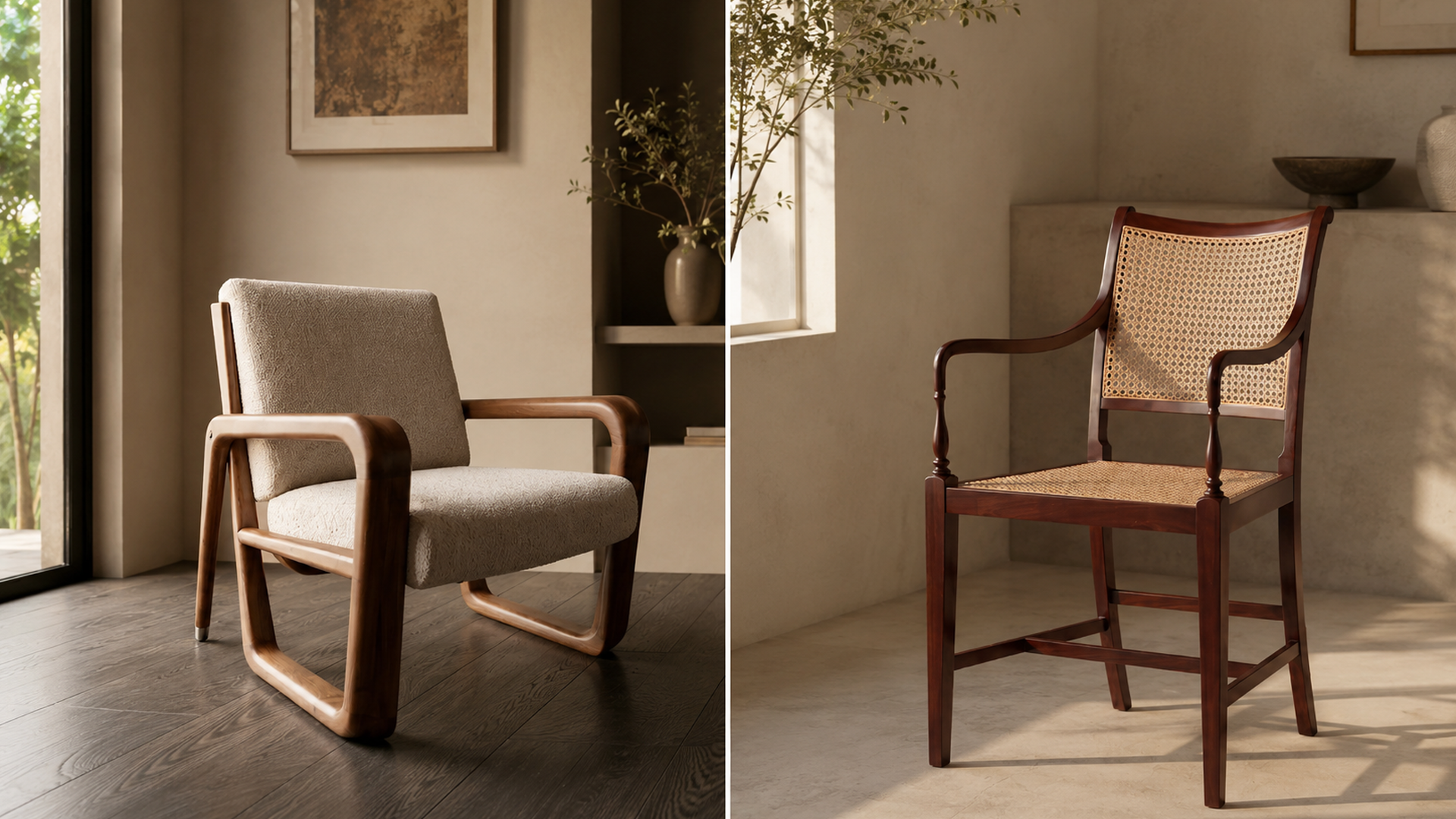
Wood does not lie. It swells when the monsoon arrives, it tightens in peak summer, and twenty years in, it tells you exactly how it was chosen.
Teak vs sheesham is not a question of which wood is fashionable this season.
It is a question of which one will still be standing in your dining room when your children are adults with dining rooms of their own.
Here is the honest answer, without the showroom spin.
Table of Contents
- Teak vs Sheesham: What Makes These Woods Different
- Teak Wood: Strength, Durability and Natural Resistance
- Sheesham Wood: Character, Hardness and Everyday Performance
- Teak vs Sheesham for Indian Weather and Humidity
- Which Wood Is More Resistant to Termites and Moisture?
- How Teak and Sheesham Compare in Furniture Design
- Maintenance and Care: Which Wood Is Easier to Live With?
- Teak vs Sheesham: Cost, Value and Long-Term Investment
- Which Wood Is Better for Different Types of Furniture?
- How Casa Carigar Selects Wood for Handcrafted Furniture
- Conclusion
- FAQs
Teak vs Sheesham: What Makes These Woods Different
Both are elite Indian hardwoods. Both are used in furniture that is meant to outlive a mortgage. But they come from different trees, different densities, and different temperaments.
- Teak (Tectona grandis) carries natural oils that repel water and pests from the inside out
- Sheesham (Dalbergia sissoo), also called Indian rosewood, is denser, heavier, and known for dramatic, high-contrast grain
- Teak leans toward quiet consistency. Sheesham leans toward character you can see from across the room
Neither is better in the abstract. The right one depends on the room, the climate inside your home, and how the piece was actually made, not just what it is made of.
Teak Wood: Strength, Durability and Natural Resistance
Teak wood durability is not marketing language. The natural oils in the grain genuinely resist warping, cracking, and water damage over decades, which is why old ships and older palace furniture were built from it.
What matters more than the species, though, is the cut. The Studio Grain works with 100 percent solid, FSC-certified Himalayan teak, chosen specifically for tight growth rings that resist twisting even under seasonal stress. Their Reclaimed Palace Hardwoods initiative goes further, salvaging centuries-old teak from Jodhpur's forts and giving it a second life, visible in pieces like the Kari Wall Shelf. Teak this old is not fragile. It is proven.
Sheesham Wood: Character, Hardness and Everyday Performance
Sheesham wood durability shows up differently. It is harder and heavier than teak, which makes it excellent for furniture that takes daily impact, chairs that get pulled out fast, tables that hold weight.
Its real strength, though, is visual. AKFD Studio deliberately works with native timbers like Sheesham to let the grain speak instead of masking it, and their Howard Arm Chair is a good example of what that restraint looks like in a heavy-use dining setup. Sheesham asks to be seen, not hidden under paint.
Teak vs Sheesham for Indian Weather and Humidity
Indian homes swing between extremes. Coastal humidity, dry interior heat, monsoon damp that seeps in through window frames.
- Teak's natural oils make it more stable across these swings, which is why it is the standard choice for outdoor and semi-outdoor furniture
- Sheesham performs well indoors but is more reactive to sudden humidity shifts if the finish has not sealed it properly
- Neither wood fails on its own. Most failures come from a finish that was never designed to let the wood breathe
Which Wood Is More Resistant to Termites and Moisture?
This is the question that decides most furniture arguments in Indian households, and rightly so.
- Teak's oil content naturally deters termites and resists rot, even in outdoor conditions
- Sheesham resists dry wood termites well and holds up structurally, though it is not as naturally waterproof as teak
- For pieces that will sit near a balcony door, a garden, or a humid ground floor, teak wood maintenance is simpler because the wood is doing more of the work on its own
The Garden Room builds directly for this reality. Their solid weathered teak pieces, including the Refolo Outdoor Lounge Set and the Duca Coffee Table, are made to sit through a real monsoon without decay.
How Teak and Sheesham Compare in Furniture Design
Teak's tight, stable grain makes it a natural choice for fine carving and intricate joinery. b.form studio uses this exact quality in the Gom Coffee Table, where solid teak becomes the canvas for undulating rims that would split a less stable wood.
Sheesham, being heavier and bolder in grain, tends to shine in structural, statement pieces. AKFD Studio's Clutch Coffee Table leaves its joinery exposed on purpose, treating the interlocking as design rather than something to hide.
Maintenance and Care: Which Wood Is Easier to Live With?
- Wipe both woods with a dry or barely damp cloth, never a soaking one
- Avoid direct, sustained sunlight, which dries out natural oils in both species
- Re-oil teak once every year or two to maintain its natural water resistance
- Keep sheesham away from constant dampness and dry it promptly if water is spilled
- Never seal either wood with thick lacquer. b.form studio's open grain PU staining, used on the Valeria II Dining Chair, protects the surface while keeping the wood's pores open to expand and contract naturally
Teak vs Sheesham: Cost, Value and Long-Term Investment
Teak generally costs more upfront, and that price reflects genuine scarcity along with decades of proven longevity. Sheesham costs less to begin with and delivers strong value for furniture that takes daily wear without facing constant moisture.
Is teak wood worth the higher price? If the piece is going near a door, a window, or an outdoor space, yes. If it is an indoor dining chair that will be used hard for twenty years, sheesham can be the smarter spend.
Which Wood Is Better for Different Types of Furniture?
- Outdoor and semi-outdoor pieces: teak, for its natural weather resistance
- Heavy-use dining chairs and tables: sheesham, for its density and impact resistance
- Fine carved or inlaid pieces: teak, for its stable, workable grain
- Statement furniture with visible joinery: sheesham, for its bold grain and structural strength
How Casa Carigar Selects Wood for Handcrafted Furniture
Solid teak from Mysuru. Solid sheesham from workshops that have worked the timber for generations. No veneers pretending to be something they are not. This is the sourcing philosophy laid out in the Casa Carigar manifesto, and it applies to every plank before it ever reaches a carpenter's bench.
What you notice in the finished piece, the checking in the grain, the slight variation from one leg to the next, is not a flaw to be sanded away. As The Artisan's Signature You Didn't Notice explains, these small irregularities are proof that a hand, not a machine, made the decision. Joinery matters as much as the species itself. The Studio Grain's metal-free, interlocking joinery lets heavy timber planes fit flush without a single screw working itself loose over the years.
Conclusion
Teak and sheesham are not rivals. They are two different answers to the same question, how do you want your furniture to age. Choose based on where the piece will live and how it will be used, not on which name sounds more premium. Good wood, honestly sourced and properly joined, was always going to last. That was the whole point of choosing solid hardwood in the first place.
FAQs
Which is better, teak or sheesham wood?
Neither is universally better. Teak suits outdoor and moisture-prone spaces, while sheesham suits heavy-use indoor furniture where density and impact resistance matter more.
Which wood lasts longer, teak or sheesham?
Teak generally lasts longer in humid or outdoor conditions because of its natural oil content. Indoors, properly finished sheesham can last just as long.
Is sheesham good for furniture in India?
Yes. Its hardness makes it excellent for dining tables, chairs, and structural pieces that see daily use, as long as it is kept away from constant dampness.
Is teak wood worth the higher price?
For pieces exposed to weather, humidity, or heavy sun, yes. For purely indoor furniture, sheesham can deliver comparable durability at a lower cost.
Casa Carigar
From the Casa Carigar workshop