Why Is Handmade Furniture Expensive? Here's What You're Actually Paying For
Why Is Handmade Furniture Expensive? What You’re Paying For
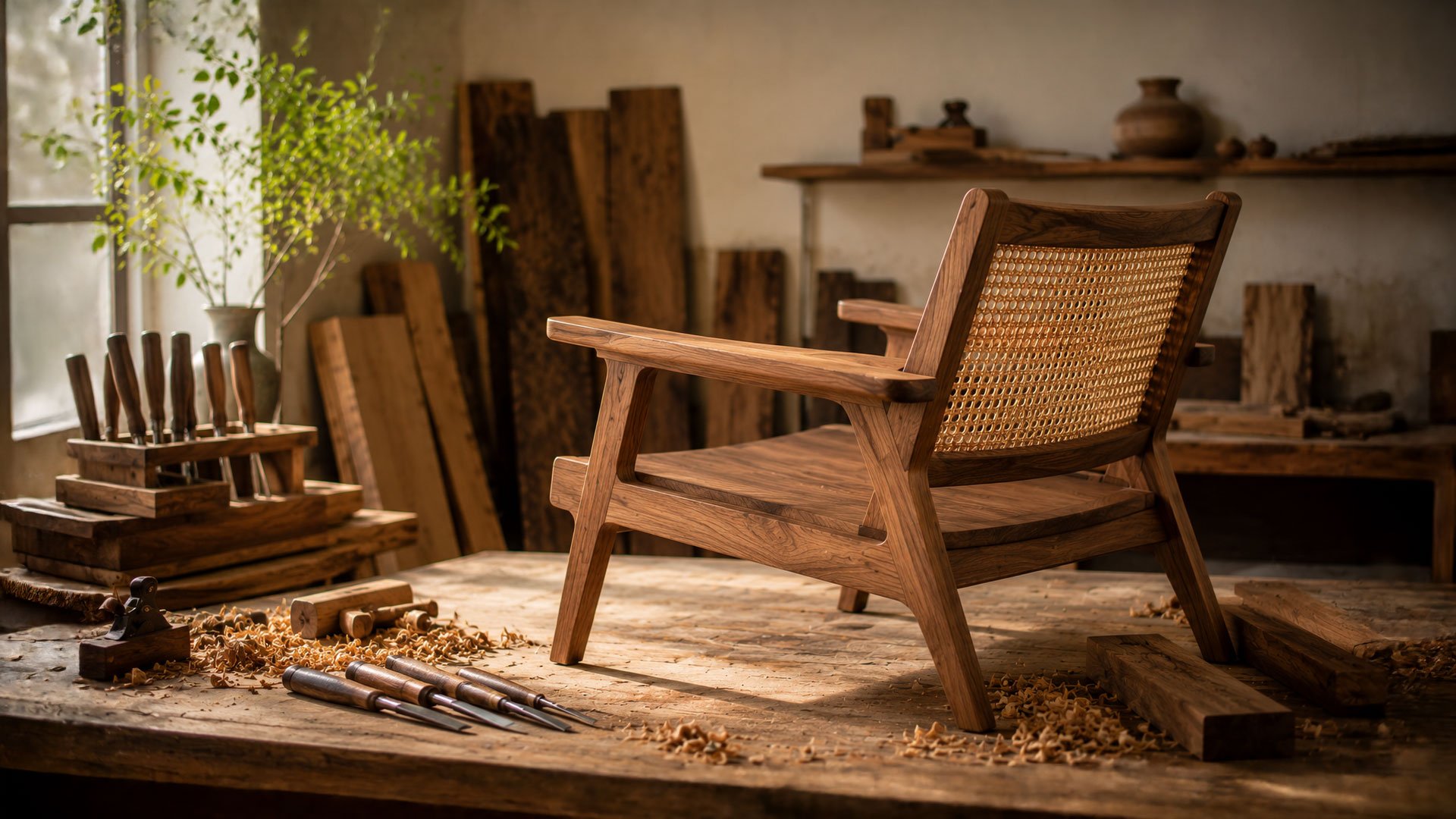
The first time someone compares a handcrafted dining table to a mass-produced one, the difference in price can feel surprising.
After all, they both serve the same purpose.
They hold plates, conversations, morning coffees, and family dinners.
So why is one significantly more expensive than the other?
The answer is that furniture is rarely just furniture. Behind every handcrafted piece are decisions most people never see. The choice of wood.
The hours spent shaping, joining, sanding, and finishing. The experience of the maker. The materials that will still look good a decade from now.
The question of why handmade furniture is expensive becomes easier to answer once you understand what goes into creating something designed to last for years rather than seasons.
Table of Contents
- Why Handmade Furniture Costs More Than Mass-Produced Alternatives
- The True Cost of Materials: Solid Wood vs Engineered Options
- Time and Skill: The Value of Artisan Craftsmanship
- What Goes Into Every Handcrafted Piece
- Durability and Longevity
- Ethical Production and Fair Wages in Furniture Making
- Customisation and Design
- Is Handmade Furniture Worth the Investment for Modern Homes?
- How Casa Carigar Delivers Value Through Craft and Curation
- Conclusion
Why Handmade Furniture Costs More Than Mass-Produced Alternatives
Mass-produced furniture is designed for efficiency.
Handmade furniture is designed for permanence.
This difference sits at the centre of the conversation around the cost of handcrafted furniture.
Factory production spreads costs across thousands of identical units. Handcrafted furniture relies on individual attention at every stage of the process.
A maker is not simply assembling components. They are selecting materials, refining details, and making decisions that affect how the piece will age over time.
That level of involvement naturally changes the price.
The True Cost of Materials: Solid Wood vs Engineered Options
Materials account for a significant portion of furniture pricing.
Many handcrafted pieces are built using teak, oak, ash, rosewood, or other hardwoods chosen for their durability and character.
These materials cost considerably more than engineered alternatives, but they also behave differently over decades of use.
The Casa Carigar manifesto makes the material position explicit: solid teak from Mysuru, brass from Moradabad, cane from Coimbatore. Named origins, not approximations.
That specificity is part of what separates authentic material sourcing from catalogue copy.
The Studio Grain applies this directly. Their FSC-Certified Himalayan Teak and Reclaimed Palace Hardwoods, salvaged from historic Jodhpur fortresses, give each piece a material core that is both ecologically considered and historically traceable.
Cocoon Fine Rugs makes the same argument in textiles. Their 100% Pure Heirloom Material Specification uses exclusively handspun Afghani Wool and pure Silk, a deliberate contrast to the cheap synthetic backings standard in mass-market production.
The discussion around the cost of solid wood furniture often overlooks the long-term picture.
Solid wood can be restored, refinished, and repaired. Engineered materials are often replaced when they begin to deteriorate.
The material is not just part of the furniture. It is part of its lifespan.
Time and Skill: The Value of Artisan Craftsmanship
Some things cannot be rushed.
Hand carving. Traditional joinery. Hand-finishing. Achieving a flawless surface without removing the character of the grain.
These processes require years of practice and judgement. The artisan craftsmanship value lies in the knowledge accumulated over generations.
A skilled maker understands how wood moves, how joints perform over time, and how to create a finish that enhances rather than hides the material.
The Casa Carigar editorial The Artisan's Signature You Didn't Notice traces exactly this: the quiet marks, the unsung authorship, the accumulated material knowledge that disappears entirely in automated manufacturing.
Anom Studio Atelier makes the time cost visible. Their complex models require a 16 to 20-week artisan production cycle, a lead time that exists not because of inefficiency but because genuine collectible craft does not compress. 3200 BC operates similarly, running a 4-week hand-forging cycle for each batch rather than a continuous assembly line.
Home of Chirmi works exclusively to order on an 8 to 10 week lead time, ensuring every piece passes full quality inspection before it leaves the workshop.
This is a large part of why artisan furniture costs more than furniture produced entirely by machines.
What Goes Into Every Handcrafted Piece
Most people see the finished product.
They do not see the seasoning of timber, the repeated sanding, the finish samples, the joinery work, or the countless small adjustments made throughout the process.
Every handcrafted piece represents hours of labour long before it reaches a home.
A proper bespoke furniture price breakdown includes far more than raw materials. It includes:
- Workshop expertise and design refinement
- Finishing and quality control
- Traditional joinery and hand-worked surfaces
- The infrastructure required to bring a piece from the workshop to the room
Durability and Longevity
Furniture becomes expensive when it needs replacing every few years.
One of the strongest arguments for handcrafted furniture is longevity. Well-made furniture is designed to live through changing interiors, growing families, and evolving tastes.
It develops patina rather than deterioration. It gains character rather than becoming disposable.
AKFD Studio builds with this lifespan in mind. Their pieces are engineered using native timbers and exact workshop joinery to gather character gracefully over generations, designed to outlast fast-fashion trends rather than participate in them.
Rural Theory makes the same case in metal. Their solid brass accent furniture and serveware, produced through intricate hand-casting, resist denting and bending in ways that hollow or composite alternatives cannot. The physical weight is part of the point. These are the objects that become tomorrow's family heirlooms.
When comparing handmade vs factory furniture prices, the lifespan of the piece is often the most important factor.
Ethical Production and Fair Wages in Furniture Making
Furniture pricing also reflects the people behind the work.
Responsible workshops invest in skilled labour, fair compensation, and sustainable production practices. These costs are real, and they should be.
Indune holds Verified Fair Trade Credentials, working directly with over 50 independent master craftsmen across Rajasthan and maintaining ethical compensation and humane workspace conditions as foundational requirements, not afterthoughts.
Anantaya takes this further through their Social Impact Ecosystem, infusing traditional craft clusters with fair trade principles and contemporary capital to support generational craft preservation and women artisans.
The conversation around sustainable furniture pricing is not simply about environmental impact. It is also about preserving skills, supporting workshops, and ensuring that traditional craftsmanship remains viable for future generations.
Quality craft cannot exist without the people who create it.
Customisation and Design
Not every room is the same.
Not every homeowner wants the same thing.
This is where custom furniture differs significantly from mass production. Dimensions, finishes, materials, and design details can be adapted to suit a specific space and way of living.
Any practical custom furniture pricing guide will show that personalisation adds complexity. It requires:
- Additional design work and consultation
- Prototyping and workshop time
- Material selection specific to the brief
The result is furniture that feels considered rather than standardised.
Is Handmade Furniture Worth the Investment for Modern Homes?
The answer depends on what you value.
If the goal is immediate affordability, mass-produced furniture often wins.
If the goal is longevity, craftsmanship, material honesty, and ownership that extends beyond trends, handcrafted furniture offers something different.
The best pieces become part of a home's story. They move with families, adapt to new spaces, and often outlast the conversations about what they cost in the first place.
How Casa Carigar Delivers Value Through Craft and Curation
Finding exceptional craft has never been the problem. Knowing where to look has.
Casa Carigar was built to close that gap. By working with carefully curated workshops and contemporary studios across India, it helps architects, designers, and homeowners access exceptional craftsmanship with transparency and confidence. Every material is specified. Every maker is curated by invitation. Every piece is sourced with accountability from the workshop to the room.
When you know exactly what went into something and who made it, the price stops being a question.
It becomes the answer.
Conclusion
Handmade furniture costs more because more goes into it.
Better materials. More time. Greater skill. Thoughtful production. Skilled makers who understand that furniture should improve with age rather than be replaced by it.
The price reflects the process.
And often, the process is exactly what makes the piece worth living with for decades.
FAQs
Why Is Handmade Furniture More Expensive Than Factory-Made Furniture?
Handmade furniture involves skilled labour, premium materials, traditional techniques, and significantly more time than factory-made alternatives. These factors contribute to a higher price but also to higher quality and longevity.
Is Handmade Furniture Worth the Higher Price?
For homeowners who value durability, craftsmanship, customisation, and material honesty, handmade furniture often provides better long-term value than furniture designed for short-term use.
Does Handcrafted Furniture Last Longer?
Yes. Handcrafted furniture is typically built using stronger materials and construction methods, making it more durable and easier to repair or restore over time.
What Factors Affect the Cost of Custom Furniture?
The following factors all influence custom furniture pricing:
- Material selection and dimensions
- Complexity of design
- Craftsmanship and finishing techniques
- Labour and workshop time
Casa Carigar
From the Casa Carigar workshop