Why Buy Artisan Furniture Over Mass-Produced? An Honest Breakdown
Handmade Furniture vs Mass Produced: Which Should You Buy?
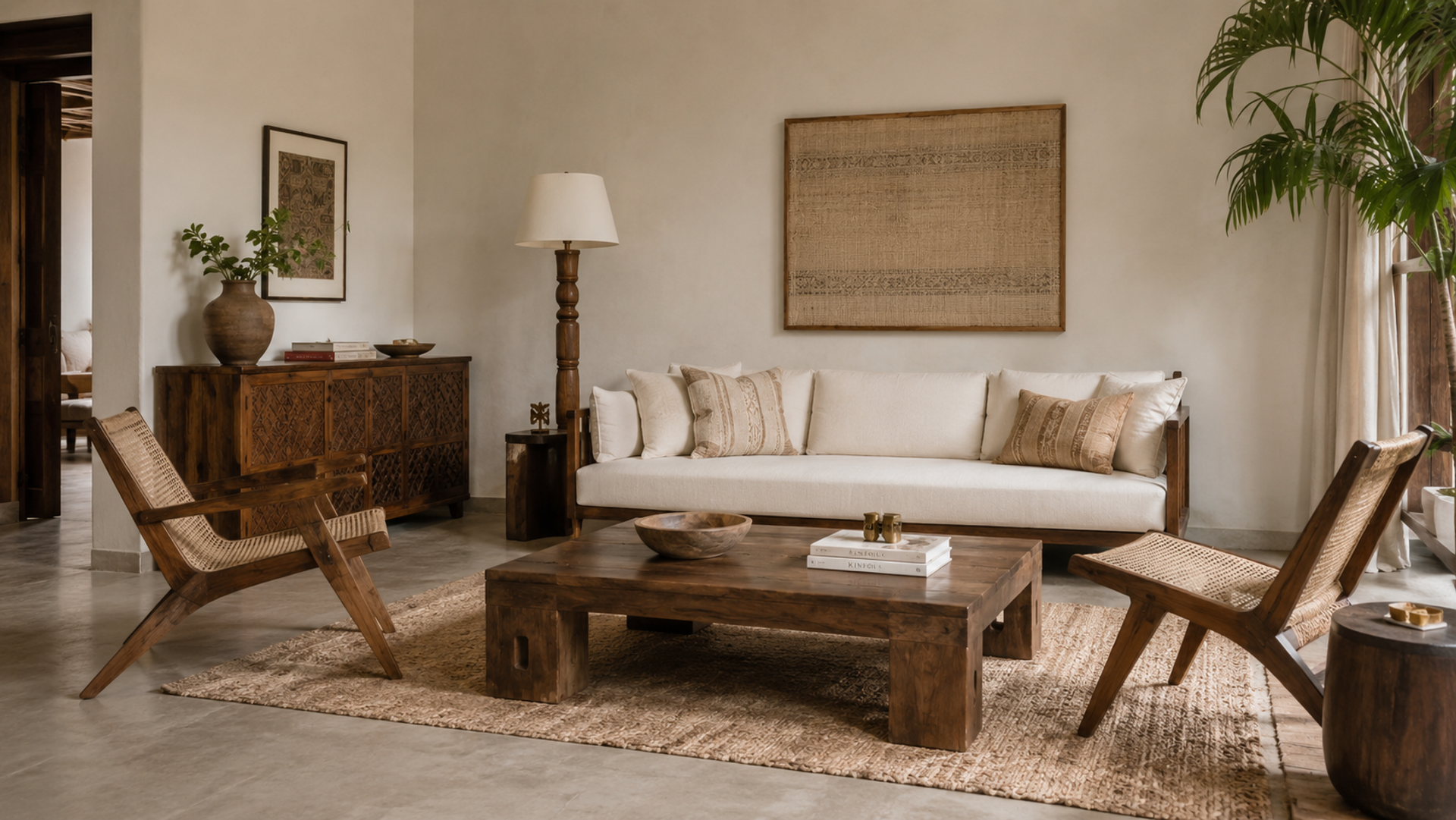
Furniture reveals more about a home than almost any other object within it.
Long after paint colours change and trends move on, the dining table remains where conversations unfold, the armchair settles into daily rituals, and the cabinet quietly gathers stories of its own.
This is what makes the discussion around handmade furniture vs mass-produced furniture so relevant.
The choice is rarely just about appearance. It is about materials, longevity, craftsmanship, and the values that shape a home over time.
Whilst mass production has made furniture more accessible than ever, artisan furniture continues to hold a different kind of appeal.
It carries the mark of the maker, the character of honest materials, and a sense of permanence that is increasingly rare.
Before deciding which approach belongs in your home, it is worth looking beyond price tags and catalogues to understand what truly separates handcrafted furniture from factory-made alternatives.
Table of Contents
- Handmade Furniture vs Mass-Produced
- Solid Wood vs Engineered Alternatives
- Why Artisanal Work Stands Apart
- Which Furniture Truly Lasts Longer?
- Sustainability and Ethical Production in Furniture Making
- Cost vs Value: Is Artisan Furniture Worth the Investment?
- The Advantage of Custom-Made Pieces
- The Emotional Value of Owning Handcrafted Furniture
- How Casa Carigar Elevates Artisan Furniture for Modern Homes
- Conclusion
Handmade Furniture vs Mass-Produced
Walk through most furniture showrooms today, and a familiar pattern emerges. The silhouettes are similar. The finishes are similar. Often, even the materials are similar.
The conversation around handmade furniture vs mass-produced furniture is not simply about appearance.
It is about provenance, materials, longevity, and the people behind what enters your home.
The Casa Carigar manifesto makes the position clear: mass production is an absence here, not a future.
The belief that the way a piece was made decades ago should still be the way it is crafted today is not nostalgia. It is a design conviction.
Mass-produced furniture is designed for scale. Artisan furniture is designed for permanence. One prioritises efficiency. The other prioritises intention.
Solid Wood vs Engineered Alternatives
The debate around solid wood vs engineered wood furniture sits at the centre of this conversation.
Solid wood carries a visible grain, natural variation, and the ability to age gracefully.
Over time, it develops character rather than deterioration.
A teak dining table made by a skilled workshop often looks better after a decade of use than it did on the day it arrived.
Engineered alternatives serve a purpose, particularly in high-volume manufacturing, but they rarely offer the same lifespan, repairability, or material honesty.
The Studio Grain builds on exactly this conviction. Their use of FSC-Certified Himalayan Teak, combined with Invisible Tool-Free Joinery that avoids metal screws and visible brackets, produces pieces engineered to become sustainable heirlooms rather than furniture with a replacement date.
For those who value craftsmanship, the material itself becomes part of the story.
Why Artisanal Work Stands Apart
The strongest artisan furniture advantages are often found in the details that never make it into a catalogue.
- Traditional joinery
- Hand-finished surfaces
- Wood selected for grain rather than convenience
The quality of handmade furniture comes from decisions made by a maker rather than a production line.
A skilled artisan notices things a machine cannot. Small adjustments. Material behaviour. Structural integrity.
The Casa Carigar editorial The Artisan's Signature You Didn't Notice traces exactly this: the quiet marks, the unsung authorship, and the material choices that disappear entirely in automated manufacturing.
3200 BC holds this as a founding principle. Their work is described as built, not made.
Restricted small batches, intentional hand-forging, and a quiet but firm rebellion against mass-produced mediocrity mean that every piece that leaves their workshop is unique.
F Six Homes takes an equally deliberate stance, explicitly rejecting the flat, clinical uniformity of industrialised home accessories.
Their work celebrates unpredictable alchemy and unrefined surfaces, where natural flaws are living art rather than defects.
That level of attention is difficult to replicate at scale.
Which Furniture Truly Lasts Longer?
When discussing handcrafted vs machine-made furniture durability, the answer usually comes down to construction.
Factory-made furniture is often built for predictable replacement cycles. Handmade furniture is built with repairability in mind.
A well-made, solid wood cabinet can remain in a family for decades. Components can be restored, refinished, and repaired rather than discarded.
AKFD Studio is a clear example of what timeless heirloom quality looks like in practice.
Their pieces are sturdily engineered with honest materiality, designed to outlast fast-fashion trends and gather character gracefully over generations rather than deteriorate within them.
Longevity is one of the most overlooked benefits of handcrafted furniture, particularly for homeowners who prefer buying fewer things and buying them well.
Sustainability and Ethical Production in Furniture Making
The conversation around sustainable furniture vs mass production is becoming increasingly relevant.
Large-scale manufacturing depends on volume. Traditional workshops often depend on:
- Precision and smaller batches
- Generations of material knowledge
- Local materials that reduce waste naturally
- Production only of what is required
La Dimora Selections builds entirely around this premise.
They reject the superficial nature of passing retail trends and focus on handcrafted objects meant to be lived with and remembered across generations. Authored design, not trend design.
For buyers seeking eco-friendly furniture choices, craftsmanship is often a more meaningful sustainability decision than marketing claims.
Cost vs Value: Is Artisan Furniture Worth the Investment?
Artisan furniture usually carries a higher upfront cost. That is true.
What matters is understanding the difference between cost and value.
A dining table built from solid teak, shaped by experienced makers, and designed to last decades, serves a different purpose than furniture expected to be replaced within a few years.
The question is not whether artisan furniture costs more.
The question is whether replacing furniture repeatedly costs less.
The Advantage of Custom-Made Pieces
One of the strongest arguments in the custom furniture vs factory-made debate is personal relevance.
Mass-produced furniture is designed for everyone.
Custom furniture is designed for a specific room, a specific home, and a specific way of living.
This is often why choosing custom furniture becomes less about aesthetics and more about fit.
Proportion, material selection, finish, and functionality can all be considered from the beginning.
The result feels less like a purchase and more like something that belongs.
The Emotional Value of Owning Handcrafted Furniture
Furniture occupies more than physical space.
A handcrafted dining table becomes the setting for celebrations. A hand-finished cabinet quietly gathers stories over decades.
Part of that emotional weight comes from the trace of the human hand still present in the object. Milimeter makes this literal.
Their pinched pottery collections are shaped by systematically pressing raw clay walls by hand, embedding the physical impression and memory of the artisan directly into the ceramic.
The result is something no automated stamp can produce.
Anom Studio Atelier works with the same conviction in metal.
Their use of Repoussé, hammering brass sheets from behind so the metal takes on soft, flowing behaviour and visual depth, produces surfaces that regular industrial stamping simply cannot mimic.
Collektklove extends this further through artisan hand-blown glasswork. Molten glass shaped entirely by eye and hand, with subtle waves and bubbles inherent to genuine handcraft, carries the mark of its making in every piece.
The emotional value comes from knowing where something came from, who made it, and what tradition it carries forward.
These are not simply objects. They become part of a home's memory.
How Casa Carigar Elevates Artisan Furniture for Modern Homes
The question Casa Carigar was built to answer was not whether great Indian craft exists. It was how to make it findable.
By connecting independent workshops and contemporary studios with architects, designers, and homeowners, Casa Carigar makes exceptional craft easier to discover, specify, source, and deliver.
Every maker is curated by invitation. Every material is specified with transparency. Every piece begins in a workshop and ends in a home designed with intent.
Provenance is not a selling point added afterwards. It is the structure around which everything else is built.
Conclusion
The choice between artisan and mass-produced furniture ultimately comes down to what you want your home to hold.
Convenience has its place.
So does craftsmanship.
But when material honesty, longevity, cultural depth, and meaningful ownership matter, artisan furniture offers something factory production rarely can: a story worth living with for decades.
FAQs
Is Handmade Furniture Better Than Mass-Produced Furniture?
Handmade furniture typically offers stronger construction, better materials, and greater attention to detail. It is often designed to last significantly longer than mass-produced alternatives.
Why Is Handcrafted Furniture More Expensive?
Handcrafted furniture involves:
- Skilled labour
- Careful material selection
- Traditional techniques
- Lower production volumes
All of which contribute to its cost.
Does Handmade Furniture Last Longer Than Factory-Made Furniture?
In many cases, yes. High-quality handmade furniture, especially when built from solid wood, is often more durable and easier to repair over time.
What Are the Disadvantages of Mass-Produced Furniture?
Mass-produced furniture may:
- Use lower-quality materials
- Offer limited customisation
- Have a shorter lifespan compared to well-made artisan pieces
Casa Carigar
From the Casa Carigar workshop