Interior Design Trends 2026
Interior Design Trends 2026: Craftsmanship, Heritage and Curated Living
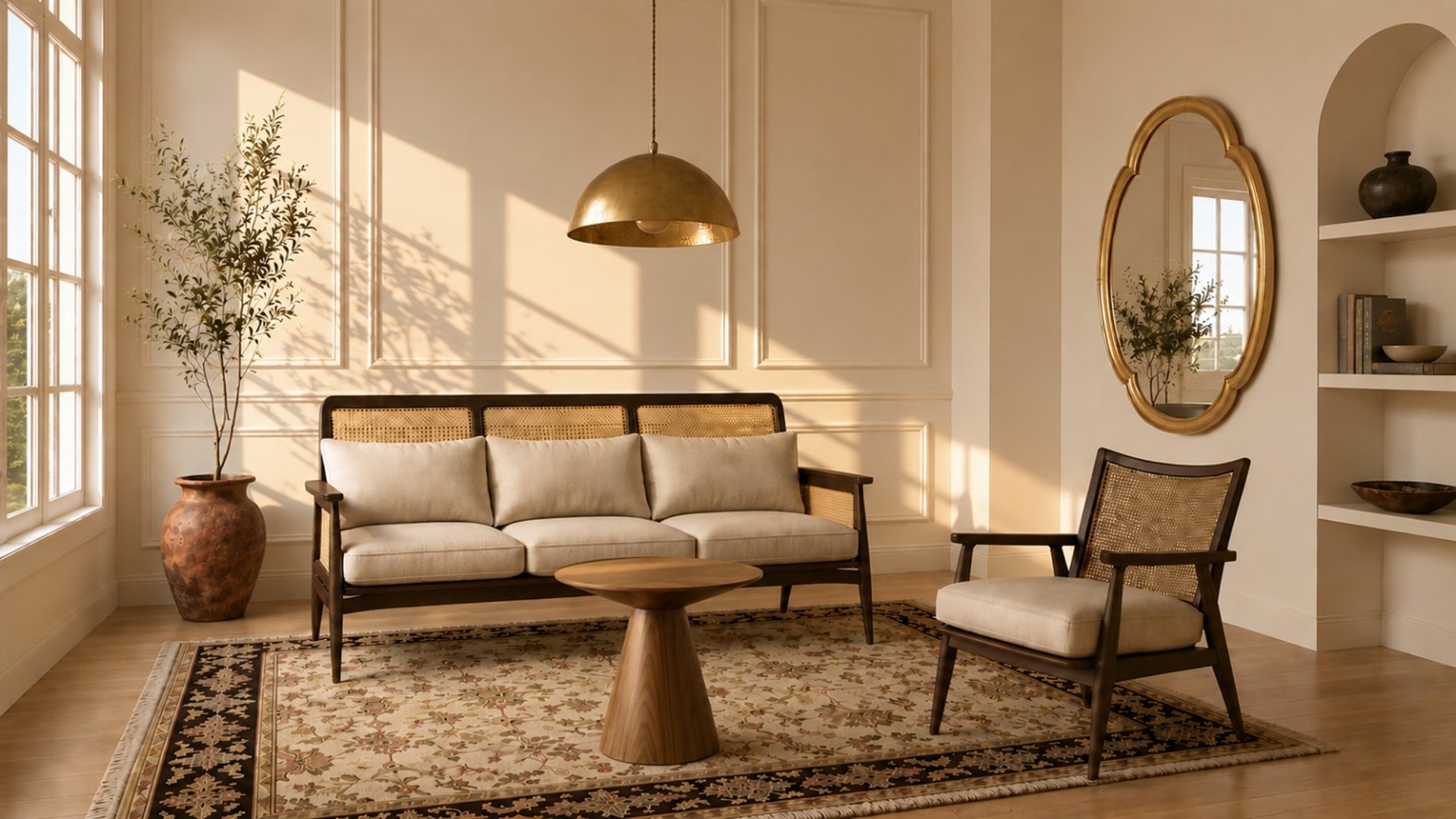
Everyone's talking about interior design trends 2026 right now.
Most of it's noise.
You see the same beige walls, same oversized mirrors, same "minimalist chic" that somehow looks identical whether you're scrolling in Mumbai or New York. Not luxury. Just expensive blandness with a price tag that makes it feel important.
2026 is different. Finally. The homes that actually matter right now aren't following trends. They're not chasing the next big thing on Instagram. They're returning to something real. Handmade. Intentional. Built to last longer than the next Pinterest refresh or design cycle.
If you're thinking about what interior design trends 2026 actually look like, forget everything you've seen before. Explore our editorial insights to help you navigate this shift.
Why 2026 Marks a Shift Towards More Meaningful and Timeless Homes
Listen. You've been to Jodhpur. You've held a piece of hand-carved wood and felt its weight. You know the difference between an object and something that was actually made.
That's what's happening in luxury homes right now. People are exhausted and exhausted by trends that last eight months. Exhausted by furniture that feels disposable even when it costs money. Exhausted by spaces that look beautiful in photos but feel empty when you're actually living in them.
They're turning toward curated living spaces instead. Spaces that don't scream. They want pieces that get better with age. Pieces with provenance. Pieces that tell you something about the person who made them, not about which showroom they came from. They want to stop replacing. To start investing. Our living room collection is built on exactly this principle.
The 2026 home isn't about accumulation. It's not about having more. Warm minimalist interiors are trending because they're honest about what they are: less stuff, but the stuff that stays. It's about having less, but it all matters. Every object earns its place. Every surface tells a story that doesn't involve a factory in Southeast Asia and a warehouse full of identical copies.
The Colours, Textures and Materials Defining Luxury Interiors
Terracottas. Deep forest greens. Raw concrete. Untreated wood with visible grain. Jute. Unglazed ceramics. A stone that looks pulled from the earth yesterday.
This is the natural material palette of 2026. And it's a complete rejection of what "luxury" meant five years ago. Browse our home decor collection to see how these palettes come to life across furniture and pieces.
Non-ostentatious luxury. That's what designers are calling it. Which really means: raw materials that don't pretend to be anything else. Surfaces that show age instead of hiding it. Textures you actually want to touch, not just look at.
Studios like The Studio Grain understand this in their bones. Their pieces in our furniture collection aren't smooth or perfect. They're better than perfect. The grain tells you the wood was alive. The joinery shows you how it was built. Nothing's hidden. Nothing's apologised for. This is timeless interior styling because these pieces will look as good in 2036 as they do today.
Artisan Craftsmanship and Handmade Details Take Centre Stage
The makers are finally visible.
For years, "artisan" was a marketing word. A checkbox on an Instagram caption. Something that made a mass-produced piece feel special without changing anything about how it was actually made. Not anymore.
You're not buying "artisan-inspired" mass production anymore. You're buying real artisan-crafted furniture. Actual pieces. Wood carvers of Saharanpur who learned their craft watching their fathers. Potters using clay their families have worked with for 400 years, pieces like those in our home decor collection. Weavers who understand how light moves through handknotted fibre, who can tell you exactly why this knot is tighter than that one.
Platforms like The Ambiente show Indian craftsmanship in interiors directly. You see the artist. You know the technique. You understand the choices they made. You understand why it costs what it costs.
When it comes to handcrafted home décor, it costs more because someone spent weeks on it. Not hours. Weeks. Maybe months. And they won't make the same piece twice, because that's not how handcraft works.
Blending Indian Heritage with Mediterranean Design Influences
Indian homes have always borrowed from everywhere. Jali screens and Mediterranean latticework speak the same language. Hand-painted tiles show up in both Rajasthan and Morocco.
What's different now: the conversation's honest. All good craft talks to all other crafts. A hand-carved jali mirror sits next to a cerused wood table. A Jaipur blue pottery piece looks born next to a Mediterranean urn. Mediterranean-inspired homes and Indian heritage spaces are finally breathing the same air, not pretending to be separate categories.
The Casa Carigar philosophy captures this: mass production is absent here. Every piece can speak to every other piece, because none are screaming.
Architecture-Led Spaces That Prioritise Comfort, Light and Flow
Design around the light, not furniture.
2026 homes care how sunlight moves across a wall. How a room breathes. Architectural detailing matters more than surface decoration. High ceilings. Deep niches. Shelving built into walls.
When you source from AKFD Studio through our furniture collection, you're completing a thoughtfully designed space. Their pieces work with your architecture, not against it.
Sustainable Choices That Shape Future-Ready Homes
Sustainable means one thing: will this exist in 50 years?
A mass-produced sofa landfilled in eight years isn't sustainable. A hand-finished wooden table that can be repaired indefinitely is. A rug hand-knotted with natural dyes by Cocoon Fine Rugs from our soft furnishings collection appreciates with age.
This is sustainable luxury design. Not greenwashing. Not marketing words. Real materials that last. Real value that grows over time. Our furniture collection is built on this exact philosophy—pieces designed to outlive trends.
That's the only sustainability that matters.
How to Curate a Home That Reflects Personality Instead of Passing Trends
Ask: What makes me want to sit here?
Pick pieces slowly. Live with them. If something doesn't earn its place in six months, it leaves. The homes that look effortless are ones where every object serves beauty or function, usually both.
Common Design Mistakes to Avoid When Following New Trends
Stop following trends. Trends are short. Your home is long.
Pick materials that outlast Instagram cycles. Avoid statement walls unless you'll love them in five years. Don't fill space just to fill it. And don't buy handcrafted pieces if you're treating them like they're temporary. They're not.
FAQs: Your Interior Design Questions Answered
These are the questions we hear most from people trying to understand interior design trends 2026 and build homes that actually matter.
What colours are expected to dominate luxury homes in 2026?
Forget white and beige. We're done with that. The colours that matter now are earned tones. Terracottas that look like they've been there for decades. Deep forest greens that feel like living in a garden. Ochres and burnt siennas. Raw concrete grey. The kind of palette you'd find in a Rajasthani haveli or a Mediterranean village. Colours that come from earth and clay, not from a paint chip labeled "Soft Whisper."
Is minimalism still relevant, or are layered interiors making a comeback?
Minimalism didn't go anywhere. But it evolved. The minimalism of 2026 isn't about empty rooms and white walls. It's about intentional selection. You still have less, but what you have is layered with meaning. A room with three objects instead of thirty, but those three objects speak to each other. They have texture. They have history. That's not maximalism. It's not even layering in the traditional sense. It's just honest.
How can homeowners incorporate handcrafted elements without making a space feel traditional?
This is the question everyone asks. And the answer is simpler than you think. Don't treat handcrafted pieces like museum artifacts. Use them. Live with them. A hand-carved wooden table becomes contemporary the moment you use it for actual work instead of display. A handwoven rug becomes modern when you put it in a space with clean lines and contemporary art next to it. The craft isn't traditional. The person using it is alive right now. That's what makes it contemporary.
What materials are becoming more popular in premium interior design?
When you're researching interior design trends 2026, material choice is everything. Natural materials that don't pretend. Untreated wood. Raw stone. Hand-fired ceramics. Jute and natural fibres. Brass and copper that will patina over time. Materials that age. Materials that will look better in your home in five years than they do today. Not because they're rare or expensive, but because they actually do something over time. They live with you.
Conclusion
The homes people are building in 2026 are honest. No pretense. No mass-market sameness. No "luxury" that just means you paid more for the same thing everyone else bought.
These are curated spaces. Built by people who have finally understood something basic: an object's worth isn't about price. It's about whether someone made it with their hands, their knowledge, their time. Whether it'll still be beautiful in your home in a decade. Whether it'll tell a story that matters.
Understanding interior design trends 2026 comes down to this: the shift is everything.
And it's why platforms like Casa Carigar exist. The makers were always here. The infrastructure wasn't. Now both exist. Now you don't have to choose between having a beautiful home and having it mean something.
Start exploring our brands to find your pieces. The ones that will outlast every trend that comes next.
Casa Carigar
From the Casa Carigar workshop