How to Clean and Care for Wooden Furniture in Indian Homes
How to Clean Wooden Furniture in Indian Homes
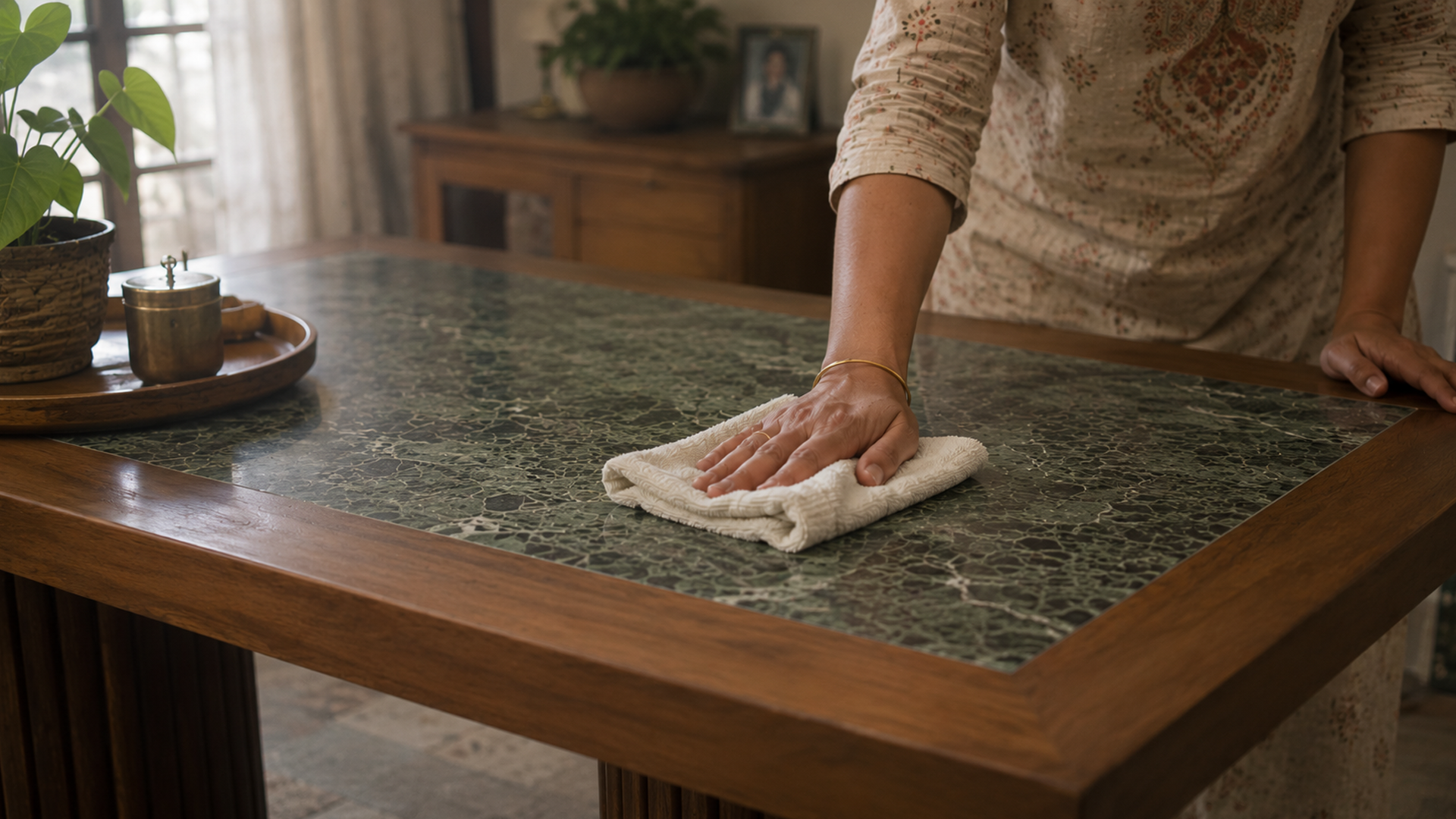
Wood remembers. Every scratch. Every ring left by a forgotten glass. Every season it has sat through, patient, taking notes.
That is not damage. That is a record.
But a record only stays legible if someone knows how to read it. And how to protect it. Learning how to clean wooden furniture properly is not about keeping something looking new.
New was never the point. It is about keeping a piece honest, functional, and alive for the next forty years, not just the next four.
This guide walks you through what actually works, especially in Indian homes, where heat, humidity, and dust ask more of your furniture than most care guides are willing to admit.
Table of Contents
Why Wooden Furniture Needs the Right Cleaning Routine
How to Dust Wooden Furniture Without Damaging the Finish
How to Clean Wooden Furniture Safely at Home
How to Remove Common Stains and Spills From Wood
When and How to Polish Wooden Furniture
Protecting Wood From Moisture, Heat and Humidity
How Indian Weather Affects Wooden Furniture Care
How to Prevent Scratches, Fading and Surface Damage
Mistakes to Avoid When Cleaning Wooden Furniture
How Casa Carigar Recommends Caring for Handcrafted Furniture
Conclusion
FAQs
Why Wooden Furniture Needs the Right Cleaning Routine
Wood is not plastic. It breathes. It expands, contracts, and reacts to whatever room you put it in. Clean it the wrong way, and you are not just missing a bit of dirt. You are quietly shortening its life.
A proper wood furniture maintenance routine does three things:
- Removes dust and grime before they wear into the grain
- Protects the natural oils that keep wood from drying out
- Preserves the finish that gives each piece its character
Skip this, and even a well-made piece from our collections starts to look tired long before it should have.
How to Dust Wooden Furniture Without Damaging the Finish
Most damage does not come from spills. It comes from dusting done carelessly, every single day, for years.
- Use a soft, dry microfibre cloth, never a feather duster that just relocates the dust
- Wipe along the grain, not against it
- Avoid rough or synthetic cloths that create fine surface scratches over time
- Dust weekly, more often if you live near a main road or a construction site
This one habit, done consistently, prevents most of the damage people later try to undo with polish.
How to Clean Wooden Furniture Safely at Home
If you are searching for how to clean solid wood furniture without stripping its finish, the honest answer is restraint.
- Use a barely damp cloth, never a wet one
- Add a drop of mild soap only for visible grime, then dry the surface immediately
- Test any new cleaning product on a hidden corner first
- Avoid silicone-based sprays. They build up over time and dull the natural wood beneath them
Water is wood's oldest enemy. Even a small amount left standing can warp a finish that took months of skilled hands to achieve.
How to Remove Common Stains and Spills From Wood
Every home collects a few marks over the years. Tea rings. Candle wax. The occasional ink smudge from a child doing homework at the dining table while everyone pretends not to notice.
- For water rings, gently rub equal parts olive oil and vinegar along the grain
- For candle wax, harden it first with an ice cube, then lift it off with a plastic edge, never metal
- For ink, dab with a small amount of rubbing alcohol on a cotton swab, working outward from the mark
- For heat marks, a soft cloth with a touch of mayonnaise, left for an hour, often clears the haze
None of these are dramatic fixes. They are patient ones. Wood has always rewarded patience over urgency.
When and How to Polish Wooden Furniture
Polishing is not a weekly task, whatever the bottle tells you. Overdoing it builds a waxy film that traps dust instead of keeping the surface protected.
- Polish solid wood furniture once every two to three months, not more
- Choose a natural, wax-based polish over silicone or aerosol sprays
- Apply in thin layers, buffing gently with a clean cloth
- Let the piece rest for a few hours before placing anything back on it
A well-seasoned piece needs less of this intervention than most people assume. Studios like Chaukhat in Jodhpur season their timber for months before a single joint is cut, which is exactly why their furniture asks so little of you later. The care happened early. Yours is just upkeep.
Protecting Wood From Moisture, Heat and Humidity
Wood and weather are in constant negotiation. Your job is to keep the terms tilted in wood's favour.
- Keep furniture at least a foot away from direct heat sources and windows that catch strong afternoon sun
- Use coasters and mats for anything holding liquid
- Maintain indoor humidity between 40 and 60 percent where you can
- Avoid placing pieces directly against damp exterior walls, especially during monsoon
How Indian Weather Affects Wooden Furniture Care
Wood maintenance in humid weather looks different depending on where you live, and Indian homes span nearly every extreme this country has to offer.
- Coastal cities like Mumbai and Chennai carry persistent humidity that can cause swelling and mould if furniture is not aired regularly
- Dry regions like Rajasthan and Delhi in peak summer pull moisture out of wood, leading to cracks if it goes unconditioned
- Monsoon months across the country call for a dehumidifier, or simply better ventilation near your wooden pieces
- Hill stations with cooler, damp air need furniture kept clear of unsealed walls
There is no single climate for wood in India. There is only the climate in your own room. Learn to read it, and the furniture takes care of itself.
How to Prevent Scratches, Fading and Surface Damage
Prevention is quieter than repair, and considerably less work.
- Use felt pads under decorative objects and table lamps
- Rotate pieces occasionally so sunlight does not fade one side more than the other
- Keep pets' claws trimmed if they share the room with your furniture
- Lift, never drag, when repositioning anything heavy
Mistakes to Avoid When Cleaning Wooden Furniture
- Using too much water. Ever.
- Reaching for generic all-purpose cleaners that were never meant for wood
- Skipping the test patch before trying something new
- Polishing out of habit rather than actual need
- Ignoring a small stain until it sets permanently into the grain
How Casa Carigar Recommends Caring for Handcrafted Furniture
Every piece we bring into a home carries a maker's judgement inside it, from the timber's seasoning to the finish applied at the very end.
Caring for it well is really just an extension of that same judgement, not a separate task.
We always recommend natural cleaning agents over chemical ones, gentle and infrequent polishing, and a general instinct toward doing less rather than more.
Studios like The Studio Grain build with this exact philosophy, choosing finishes that age visibly rather than ones that resist age altogether, because a finish that cannot show time was never honest to begin with.
If you are curious about what actually separates a well-kept home from a merely tidy one, our piece on furniture as resistance is worth the ten minutes.
Conclusion
Good wood furniture care routine habits are not complicated. They are just consistent.
Dust often, clean gently, polish rarely, and pay attention to what your particular climate is doing to the piece in front of you.
Do this, and long-lasting wooden furniture stops being an aspiration on a care card and becomes simply what happens when something is treated the way it was made to be treated. With the same care it took to build it.
FAQs
What is the best way to clean wooden furniture?
A soft, dry or barely damp microfibre cloth used along the grain, followed by a mild soap solution only when needed, remains the safest approach for most solid wood pieces.
How often should wooden furniture be polished?
Every two to three months is usually enough. Polishing too often builds residue instead of protection.
Can I use vinegar to clean wooden furniture?
In small, diluted amounts, particularly mixed with oil for stain removal, yes. Undiluted vinegar used often can strip natural finishes over time.
How do you protect wooden furniture from humidity?
Maintain steady indoor humidity, keep pieces away from damp walls and direct heat, and air out rooms regularly during monsoon months.
Casa Carigar
From the Casa Carigar workshop