Teak, Brass, and Cane: The Materials That Make Indian Craft Furniture Last a Lifetime
Teak Wood Furniture India: Why Teak, Brass, and Cane Last a Lifetime
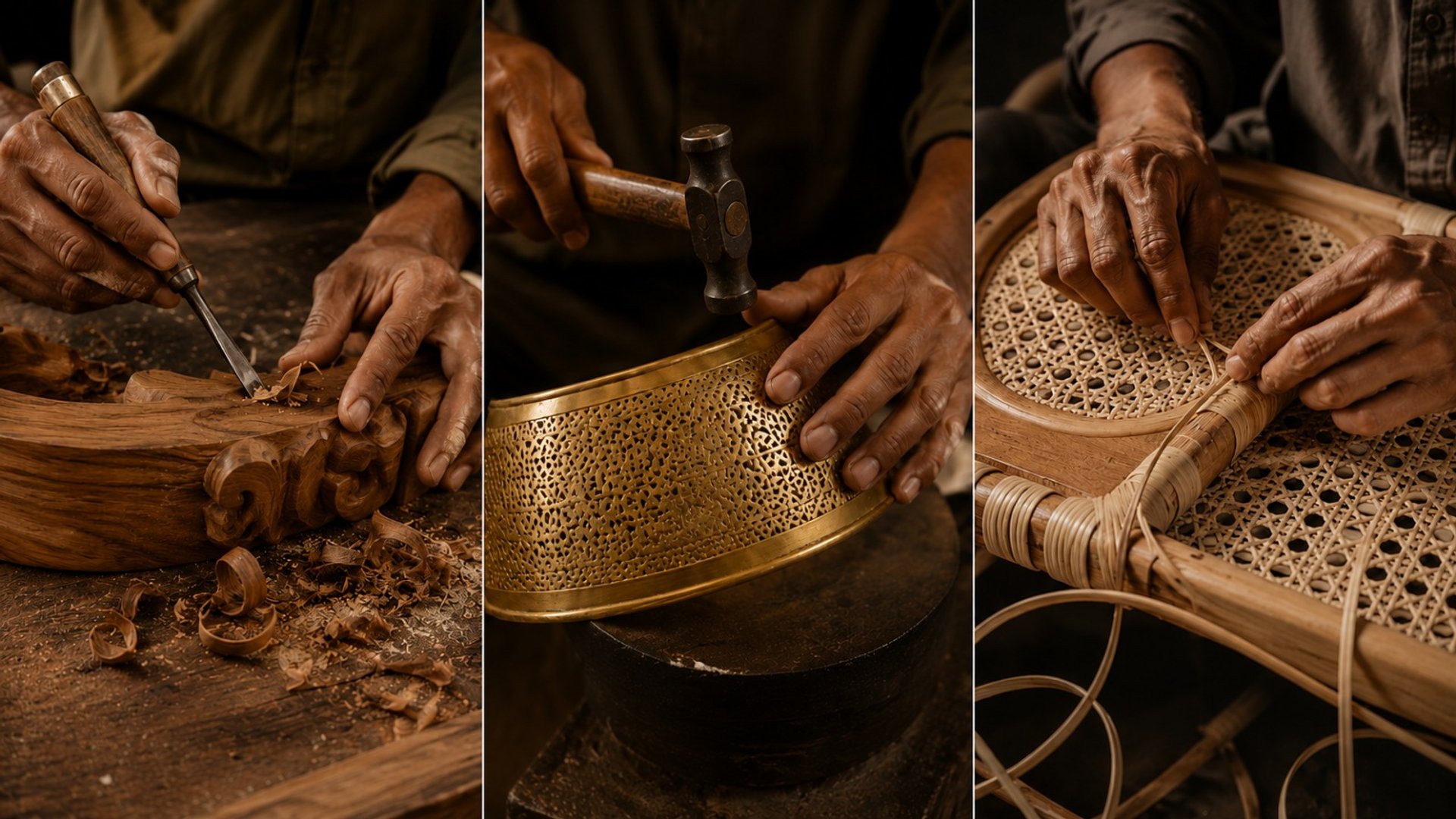
Good furniture doesn't look expensive. It looks inevitable.
That happens when materials are honest. When chosen for durability. When you choose teak wood furniture from India, you're choosing a lifetime.
Why Material Selection Determines Furniture That Lasts for Generations
Furniture fails because of shortcuts. Veneer over particle board. Glue instead of joinery. Finishes that flake.
Real furniture is built on the integrity of materials. Premium furniture materials matter more than design.
Heritage furniture making understood this. They chose teak wood furniture from India because teak survives.
Why Teak Remains the Gold Standard for Premium Furniture
Teak is dense. Stable. It resists moisture, insects, and time.
In humid climates, wood warps. Not teak. Teak has natural oils that protect from water damage. That's why shipbuilders chose it. Why did temples use it?
A teak wood furniture India frame from fifty years ago looks better now than when made. The wood has darkened.
It's developed patina. Visit The Studio Grain to see how they work with teak. Each piece respects the grain and character that time builds into wood.
The Enduring Appeal of Brass in Indian Craft Furniture
Brass doesn't hide. It oxidizes. It patinas. It shows every touch, every year.
Makers see this as honesty. Brass gets more interesting as it ages. In Indian handcrafted furniture, brass isn't plating.
It's substantial. Look at how AKFD Studio incorporates brass accents. Brass furniture accents become darker, richer, and more beautiful. That's not decay. That's development.
How Cane Adds Warmth, Texture, and Timeless Character
Cane has been woven into Indian furniture for centuries. It breathes. It's lightweight. It's flexible.
Natural cane furniture holds up because the material accepts its nature. A cane chair flexes under weight. It doesn't crack.
Every piece shows the hands that wove it. This artisan furniture craftsmanship is visible in the way cane is used, the way it shows in handwritten letters.
Look at Casa Carigar's living room collection. The cane work is structural and beautiful simultaneously.
The Craftsmanship Behind Combining Teak, Brass, and Cane
The best Indian furniture uses all three because they speak the same language.
Teak is strong. Brass is honest. Cane is flexible. Together, they create pieces that last a lifetime.
This is artisan furniture craftsmanship at its essence. Not adding more. Choosing what matters.
Makers like The Studio Grain and AKFD Studio combine materials because that's what longevity requires.
Choosing Authentic Materials Over Engineered Alternatives
Engineered wood is cheaper upfront. It fails sooner.
Solid wood furniture costs more because teak actually costs more. Because harvesting takes longer. Because processing requires skill. Because it survives.
Authentic teak wood furniture in India isn't mass-produced. It can't be. Real teak is sourced, not synthesized.
Real brass develops patina. Real cane requires hands to weave.
When you're looking at furniture, ask: Where did this material come from? How was it chosen? If the answer is "cost efficiency," the furniture will fail.
If the answer is "durability," you've found something real.
Styling Natural Materials in Contemporary Indian Homes
Teak, brass, and cane work in modern spaces because they're not trying to fit.
They establish their own presence. A teak table with brass legs and a cane chair doesn't ask permission to exist. It anchors the room.
Contemporary homes need this grounding. We're so busy with surfaces we forget substance.
Pair teak furniture with natural fiber textiles from Casa Carigar. The materials speak the same language. Everything in the room stops competing and starts conversing.
This is timeless interior design in practice. Not following trends. Building from material integrity that transcends trends entirely.
Caring for Handcrafted Furniture Without Compromising Its Beauty
Teak doesn't need varnish. It doesn't need sealant. It needs attention.
Dust regularly. Wipe spills immediately. If teak shows water marks, they fade. That's character, not damage. Brass will patina. That's the point.
The more it's used, the more beautiful it becomes.
Cane needs air circulation. Don't leave cane furniture in direct sunlight for years. The material is flexible but can dry out.
Otherwise, cane furniture lasts because the material is forgiving.
The best care is used. Sitting on the chair. Eating at the table. Living with the piece. That's how sustainable furniture design actually works. Not by protecting it from life.
By embracing the idea that living with furniture makes it better.
FAQs
Why is teak wood considered the best choice for furniture in India?
Teak is dense, stable, and naturally resistant to moisture and insects. It develops character with age.
In India's climate, teak performs where other woods fail. That's not opinion. That's chemistry.
Does cane furniture last as long as solid wood furniture?
Yes. Cane has been used in Indian furniture for generations. The material is flexible, which means it doesn't crack under stress.
It requires less maintenance than wood and actually improves with age.
Why is brass commonly used in handcrafted Indian furniture?
Brass is substantial enough to perform structurally while being beautiful as it ages. It complements wood without competing.
In luxury wooden furniture design, brass is chosen because it shows respect for the material it accompanies.
Brass patina to show the object has been loved.
How can you identify authentic teak wood furniture?
Real teak is dense and heavy. It has a distinctive grain. It feels warm to touch. Authentic teak wood furniture from India will show natural color variation.
If it looks perfectly uniform, it's likely veneer. Real teak develops patina. That's not a flaw. That's proof.
Casa Carigar
From the Casa Carigar workshop