Why Minimalist Furniture Is Taking Over Indian Homes
Why Minimalist Furniture Is Popular in Indian Homes Today
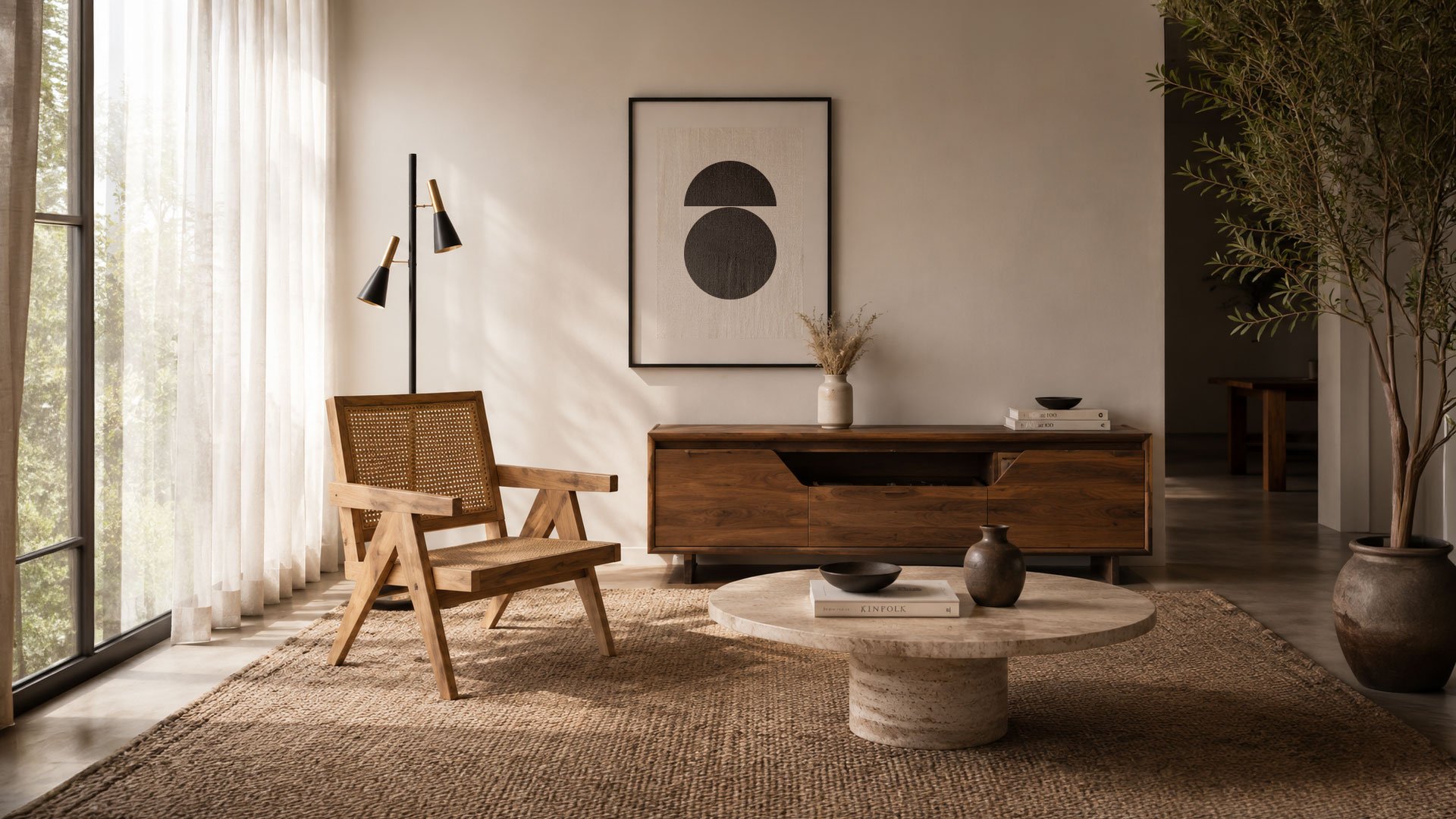
Minimalist furniture has quietly become the defining choice for Indian homes over the last decade.
The shift wasn't dramatic. It was gradual, the way a tide moves out, and you only notice when you look at where it used to be.
Table of Contents
- Why Indian Homes Are Getting Simpler
- How City Living Is Changing Furniture Choices
- Minimalism vs Traditional Indian Interiors
- The Role of Functionality in Modern Furniture Design
- How Minimalist Furniture Impacts Everyday Living
- The Downsides of Minimalism
- Blending Minimalism with Warmth and Cultural Elements
- How Casa Carigar Brings Depth to Minimalist Living
Why Indian Homes Are Getting Simpler
Walk through a well-designed flat in Bandra, Indiranagar, or Golf Links today, and there is a good chance you will find less furniture than there was ten years ago. Not because the budget was smaller. Because the choice was deliberate.
Minimalist furniture is popular in India right now for reasons that are specific to how urban life has changed, not because a global aesthetic trend arrived and everyone fell in line.
The people choosing simpler interiors are largely the same people who grew up in homes full of things, who watched their parents collect and accumulate, and who, at some point, decided they did not want to do the same.
That is not a rejection of heritage. It is a different relationship with space.
How City Living Is Changing Furniture Choices
The flats being built and sold in Mumbai, Bangalore, Hyderabad, and Delhi NCR are not large.
A fifteen-hundred-square-foot apartment is considered generous in most of these cities now.
In that kind of space, every piece of furniture either earns its place or takes up room that is not there to spare.
Minimalist furniture works in urban Indian homes because it respects the constraints.
A clean-lined teak bench with storage underneath does two jobs without announcing either of them.
A dining table that seats four comfortably but does not dominate the room allows the rest of the space to breathe.
Taro Collective designs for exactly this reality. Their agile, flat-shippable domestic furniture is optimized for a nomadic understanding of modern spaces.
The Kadam Low Storage Cabinet sits close to the floor grid to remain completely unobtrusive, keeping a calm, open line of sight across a living lounge rather than interrupting it.
Space-saving furniture in India is no longer purely a budget category. Architects and interior designers sourcing city apartments increasingly specify pieces that are resolved in their form, that do not carry unnecessary visual weight, and that allow light to move through a room rather than block it.
Minimalism vs Traditional Indian Interiors
Here is where the conversation gets interesting.
Traditional Indian interiors were not minimal. They were layered. A Rajasthani baithak with bolster cushions, brass diyas, hand-painted walls, and carved jharokha screens was a room designed to hold everything at once: colour, craft, pattern, history. It was never accidental. It was considered an abundance.
Contemporary minimalism is, in one sense, the opposite of the brief. Consider less. Resolve more.
The tension between the two is real. A family with a Nataraja that belonged to a grandparent, a brass lamp from a wedding, and a set of hand-blocked table runners is not going to strip their home to concrete and oak and call it done. Nor should they.
The more interesting question is not minimalism versus traditional Indian interiors. It is how you hold the things that matter without letting the things that do not crowd them out.
The Role of Functionality in Modern Furniture Design
Functional furniture design is not a new idea in India. The charpoy was functional. The moda was functional.
The low-slung diwan that converted a sitting room into a sleeping space at night was deeply functional.
What has changed is that functionality is now being treated as a design value rather than a practical compromise.
Contemporary interior design in India increasingly asks the same question of every piece: what does this do, and does it do it well?
BEC Furniture holds this as a founding position. Their core philosophy is eliminating unnecessary clutter to make room for focus, relaxation, and purposeful living.
The Nest Work Table makes this literal: hidden cable channels and discreet slots maintain an absolutely clear, distraction-free surface, with tech-masking built into the construction rather than applied as an afterthought.
A carved rosewood console that carries the lineage of a Jodhpur workshop and holds a collection of objects the owner has gathered deliberately is functional in a different, more durable sense. It functions as meaning.
How Minimalist Furniture Impacts Everyday Living
Rooms with fewer, better-chosen pieces are easier to live in. That is almost entirely the point.
When a room is not cluttered, the pieces that are there become visible. You notice the grain in the wood.
You notice the weight of a well-made chair when you sit in it. You notice the light at different hours.
A clean aesthetic home design does not have to be cold or sparse to achieve this. It has to be resolved.
AKFD Studio works from a maxim that captures this exactly: never more than necessary, never less than beautiful.
Their approach reframes local artisan traditions through a crisp, contemporary minimalist lens, balancing sculptural clarity with artistic restraint. The Within-Bed grounds a master bedroom in radical minimalism using solid Acacia and Mango wood, specific enough in its material honesty to hold a room without demanding anything from the space around it.
People who live in considered spaces tend to describe a particular quality of calm. Not the absence of life, but the absence of noise. The visual equivalent of a room that is quiet enough to have a proper conversation in.
The Downsides of Minimalism
Worth saying plainly: minimalism done badly is just empty.
A room with four pieces of furniture from a large-format retail chain, white walls, and no object of meaning is not a considered space. It is an unfinished one. The discipline of buying less only works if what you buy is genuinely worth having.
There is also a cultural cost to a certain kind of minimalism in India. When simplicity is imported wholesale from Scandinavian or Japanese design references without any attention to Indian material culture, you end up with rooms that could be anywhere. Rooms with no story. Rooms that do not know where they are.
That is the version of minimalist furniture in India that does not age well.
Blending Minimalism with Warmth and Cultural Elements
The rooms that actually work are the ones that understand restraint without abandoning warmth.
A cane chair with a clean silhouette next to a hand-hammered brass floor lamp. A bed frame in solid ash with a hand-woven cotton throw. A dining table where the joinery is the detail, and the surface carries years of use well.
These are not maximalist rooms. But they are not empty ones either.
The Studio Grain maintains this balance in its specific territory. Their pieces reject fast-paced commercial anonymity in favour of minimal, clean modern silhouettes intentionally infused with soulful, organic wooden imperfections.
Their Invisible Tool-Free Joinery eliminates metal screws and visible brackets, keeping focus on the wood's continuous form rather than the hardware holding it together.
Simple home interior design ideas that work in Indian homes tend to share one quality: they choose a few things with real provenance and build around them, rather than filling every surface and then editing back.
The direction matters. Starting with intention is different from arriving at intention after the fact.
How Casa Carigar Brings Depth to Minimalist Living
Less is more. These are more.
That is the premise on which the Casa Carigar collection is built. The pieces here were not chosen for minimalist interiors specifically.
They were chosen because they are resolved. They carry what they need to carry and nothing more.
A hand-turned terracotta vase from a studio in Jaipur does not need to be surrounded by twelve other objects to be interesting.
A low-profile teak daybed from a Saharanpur workshop, finished with a hand-applied oil, is specific enough in its material honesty to hold a room on its own.
Every maker is credited. Every material is specified. Because a room built around objects with such provenance is never truly minimal. It is, in the more accurate sense, full.
FAQs
Why Is Minimalist Furniture So Popular?
Minimalist furniture appeals to those seeking simplicity, functionality, and thoughtful living. By focusing on fewer, well-crafted pieces, it creates spaces that feel open, intentional, and easy to live in.
Is Minimalist Design Suitable for Indian Homes?
Absolutely. When adapted thoughtfully, minimalist design pairs beautifully with Indian craftsmanship, natural materials, and heritage pieces, creating interiors that feel both refined and deeply personal.
What Are the Benefits of Minimalist Interiors?
Minimalist interiors offer several advantages:
- Easier to maintain and keep organized
- Feel more spacious and allow standout pieces to shine
- Create a calm, balanced environment that supports comfort and everyday living
How Do You Make Minimalist Interiors Feel Warm?
Warmth comes from layering natural materials, handcrafted details, and meaningful objects. Thoughtfully chosen pieces with character often create a richer, more inviting atmosphere than a room filled with excess furniture.
Casa Carigar
From the Casa Carigar workshop