Why Chandigarh Chairs Are in Every Celebrity Home
Chandigarh Chairs Explained: From Government Use to Celebrity Homes
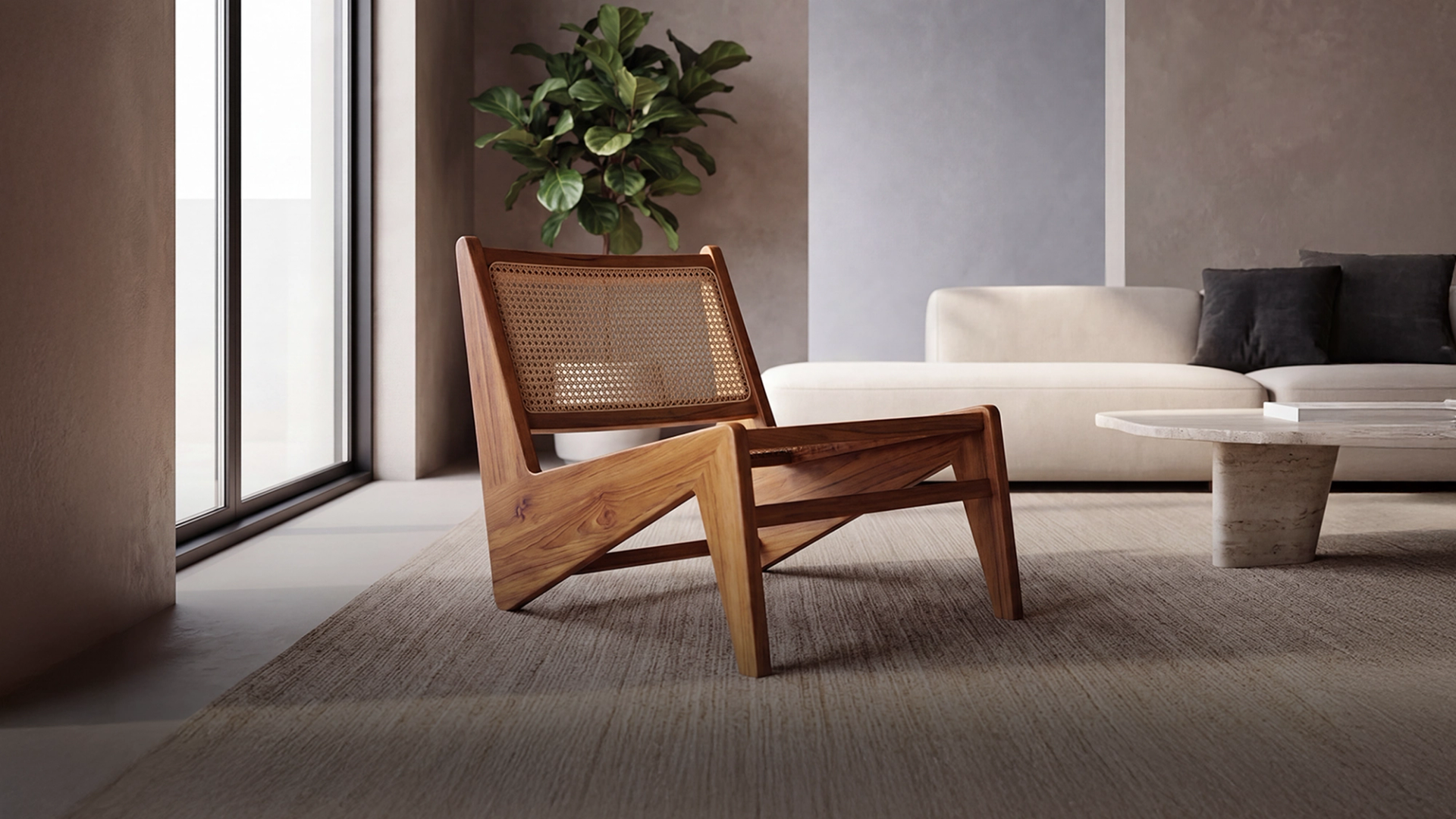
Chandigarh chairs are appearing in celebrity homes because they represent a rare overlap of design history, restraint, and cultural literacy.
Created in the 1950s as functional furniture for India’s first planned modern city, these chairs were never intended as luxury objects.
Their appeal today lies in that very origin. They signal an understanding of modernism rooted in use rather than display, and a preference for objects shaped by context, material honesty, and time.
In contemporary interiors, these chairs function less as statements and more as quiet markers of informed taste, which explains their steady presence in design-led, high-visibility homes.
Key Takeaways:
- Chandigarh chairs were designed in the 1950s as functional furniture for a planned modern city, not as decorative or luxury objects
- Their design emerged from civic needs, prioritising durability, proportion, and repeated everyday use over visual display
- The chairs belong to a broader tradition of Indian modernist furniture that adapted global modernist ideas to local materials and conditions
- Their later reclassification as vintage and collectible objects was driven by context, scarcity, and retrospective attribution rather than changes in design
- In contemporary interiors, this furniture signals restraint, design literacy, and historical awareness rather than trend-following
- Their continued relevance lies in their resistance to stylistic cycles and their grounding in use rather than ornament
A Chair Designed for a City That Did Not Yet Exist
To grasp the origin of this furniture, let’s begin with the city they were designed to serve, rather than the homes they now inhabit.
Chandigarh chairs within an integrated urban plan
When the chairs now known as Chandigarh chairs were first conceived, there was no market waiting for them.
There was barely a city. Chandigarh in the early 1950s existed more as an administrative idea than a lived place, planned as a new capital that would not replicate the spatial habits of colonial centres.
Architecture came first. Urban layout followed. Furniture entered the picture only because it had to.
These chairs were not designed as independent objects. They were components within a larger urban system that included offices, courts, libraries, and assembly halls.
Their dimensions responded to the scale of the buildings they occupied. Materials were selected for availability and repair rather than finish.
Cane could be replaced locally. Wood could be worked without specialised tools.
Furniture as civic infrastructure
The role of these chairs was functional in the most literal sense. People would sit for hours during administrative work, move chairs between rooms, and lean back during long meetings.
The furniture had to tolerate this daily use without drawing attention to itself. Comfort mattered, but so did balance, weight, and durability.
Nothing about these chairs was intended to express taste. They were meant to disappear into routine.
These chairs operated less as furniture and more as civic equipment. Their value lay in how reliably they supported everyday work within the city.
Pierre Jeanneret and the Logic of Everyday Modernism
The design coherence of Chandigarh furniture owes much to a practical modernism shaped by use rather than theory.
Designing for routine use and public settings
While the architecture of Chandigarh is often discussed through its more visible figures, much of the furniture logic was shaped by Pierre Jeanneret, who oversaw interior planning and furnishings across the city.
His focus was not on symbolic form but on functional behaviour.
The Pierre Jeanneret chairs developed for Chandigarh followed a disciplined approach. They were designed to be produced repeatedly, not customised.
Proportions were consistent. Joinery was exposed and straightforward. The inverted V legs associated with many of these chairs were structural solutions, offering stability while keeping the visual profile light.
Proportion, stability, and repetition in Pierre Jeanneret chairs
This approach reflects a strand of modernism rooted in daily use. Jeanneret designed for administrators, clerks, and visitors who were not expected to think about design at all.
Chairs needed to function the same way across different rooms and over long periods of time.
The later prominence of Jeanneret’s name speaks less to the original intent of the furniture and more to how Indian modernist furniture has been retrospectively organised within design history.
Chandigarh Furniture Before Collectibility
Before they entered galleries and auctions, this furniture belonged firmly to institutional life.
Local workshops and material realities
In its original setting, Chandigarh furniture design was a municipal exercise rather than a cultural one.
Chairs were produced in local workshops using regional timber and cane. Finishes varied. Minor inconsistencies were common.
Pieces were repaired when damaged and replaced only when they could no longer be used.
This furniture circulated within government offices and public buildings. It carried no symbolic value.
Durability and standardisation as design priorities
Standardisation was essential. Chairs needed to work across multiple institutional settings without adjustment.
Once a design proved reliable, there was little incentive to refine it further. Innovation stopped where adequacy began.
This period establishes an important baseline. The qualities now celebrated in vintage Chandigarh chairs were once unremarkable.
The chairs themselves did not change. What changed was the framework through which they were viewed.
That shift in perception is what later allowed functional furniture to be reclassified as a collectible item.
Indian Modernist Furniture: Functionality vs Ornamentation
To place this furniture within Indian modernist furniture is to read it through function rather than style.
Modernism adapted to local conditions
Modernism arrived in India as a set of ideas, not a fixed aesthetic. It had to contend with climate, materials, labour practices, and patterns of use that differed sharply from European contexts.
Within this landscape, Indian modernist furniture developed as a pragmatic response rather than a stylistic movement.
This furniture reflects this adaptation clearly. Their forms are restrained, but not ascetic. Cane seats allow airflow in warm interiors.
Solid wood frames tolerate frequent handling. The chairs acknowledge modernist principles such as clarity of structure and honest materials, but they do so without striving for visual novelty.
This grounded approach distinguishes them from many mid-century imports.
Rather than mimicking international forms, Chandigarh furniture design absorbed modernism selectively, filtering it through local conditions and everyday requirements.
Function-led iconic wooden chairs in India
In much of post-independence India, furniture was expected to work hard.
It had to survive frequent movement, shared use, and minimal maintenance. Display was secondary as durability came first.
The result was a category of iconic wooden chairs in India that gained recognition not through ornament but through persistence. Their authority comes from use over time, not from visual excess.
That quality would later make them unusually resistant to trend cycles once they entered new contexts.
From Office Use to Vintage Status
The transformation of this furniture began not with design changes, but with a shift in context.
Institutional furniture enters private markets
For decades, these chairs remained within government buildings. When offices were renovated or furniture replaced, many pieces were discarded or sold as surplus.
This movement out of institutional spaces marked the beginning of a new phase.
Once these chairs entered private hands, they were seen differently. Removed from their original settings, they began to appear singular rather than repetitive.
Signs of wear were reinterpreted as character. What had once been a standard issue started to read as rare.
This shift did not happen overnight. It unfolded slowly as collectors, dealers, and designers began to recognise the furniture's coherence as a group rather than as isolated objects.
Scarcity, attribution, and the rise of vintage Chandigarh chairs
Scarcity played a decisive role. The original chairs were finite. Production had long ceased. As interest grew, so did attempts to trace authorship and origin.
Attribution to Pierre Jeanneret provided a narrative anchor, even though the furniture had originally functioned without such emphasis.
Their value now rested on a combination of material history, limited supply, and retrospective authorship.
Utility Rebranded as Taste
Once removed from their civic origins, this furniture began to accumulate new meanings.
Context and the making of collectible designer chairs
Placed inside private homes, galleries, and studios, this furniture took on a different role. No longer surrounded by identical pieces, they were allowed to stand on their own.
Their restraint became legible. Their proportions began to read as deliberate rather than incidental.
In these settings, the chairs operated as references rather than tools. They pointed to design knowledge, historical awareness, and a preference for objects with clear provenance.
This reframing turned functional seating into collectible designer chairs, valued as much for what they represented as for how they were made.
Restraint in mid-century modern Indian furniture
These chairs leave space around themselves. Their presence is felt through balance rather than assertion.
This quality makes them unusually adaptable. They sit comfortably within contemporary interiors without needing justification.
Their design resists easy categorisation, which allows them to endure as tastes shift. What began as a utility has been reinterpreted as discernment.
Chandigarh Chairs in Celebrity Homes
The presence of this furniture in high-visibility homes is better understood as a consequence than as a cause.
Cultural signalling in design-led interiors
This furniture tends to sit slightly off to the side of the visual narrative, neither concealed nor announced. This placement is telling. The chair is not meant to perform. It is meant to be recognised.
In design-led private homes, such objects signal a familiarity with design history rather than an appetite for novelty.
These luxury chairs carry enough cultural weight to stand on their own, yet remain understated enough to avoid spectacle.
Their appeal lies in their legibility to a small, informed audience rather than in broad recognisability.
This quality aligns with how taste operates at the upper end of design culture. Value is communicated through restraint, not accumulation.
Historically grounded choices in celebrity interior design trends
Within celebrity interior design trends, this furniture functions less as a trend and more as a stabilising element.
They anchor contemporary spaces without dictating them. Their presence suggests continuity rather than reinvention.
This preference reflects a wider fatigue with interiors driven by rapid stylistic turnover. Historically grounded objects offer a way to step outside that cycle.
They allow a space to feel resolved rather than curated for effect. In this sense, the chair’s appeal is structural.
What a Chandigarh Chair Signals Today
The meaning of a Chandigarh chair today lies not in its form alone, but in the role it is asked to play.
Inside a contemporary home, this furniture rarely operates as a luxury object in the conventional sense.
They are not polished to perfection. Signs of age are often retained. Repairs are visible. These choices are deliberate.
The chair communicates a refusal of excess. It suggests confidence in proportion and material rather than in finish.
Luxury, in this context, is expressed through selection rather than embellishment. The object earns its place by holding its own without visual reinforcement.
This is why this furniture continues to circulate among collectors, architects, and designers who value coherence over statement.
The Afterlife of Capitol Complex Furniture
The journey of Chandigarh furniture ends far from its point of origin, yet remains shaped by it.
From civic use to design canon
Furniture originally produced for the Capitol Complex was never intended to circulate beyond its civic role.
Once removed from that setting, however, it entered a new interpretive frame. Objects designed for collective use were reassigned individual value.
This shift elevated certain pieces while obscuring others. Chairs that fit existing narratives of modernism were preserved.
Those that resisted easy categorisation were often overlooked. The canon that emerged reflects selection as much as survival.
Conclusion
The lasting interest in Chandigarh chairs is not driven by novelty or nostalgia. It reflects a continued respect for objects shaped by use, context, and restraint.
Designed as part of a civic system, these chairs have carried their original logic into new settings without needing reinvention.
Their movement from public offices to private homes has altered how they are read, but not how they function.
In a design landscape often defined by excess and rapid turnover, that consistency remains their quiet distinction.
Frequently Asked Questions
1. What are Chandigarh chairs famous for?
They are famous for their restrained modernist design, structural clarity, and their role as functional furniture created for one of India’s earliest planned modern cities. Their reputation comes from durability, proportion, and everyday use rather than decorative intent.
2. Who designed the original Chandigarh chairs?
The original designs were developed under the supervision of Pierre Jeanneret, who was responsible for much of the furniture and interior planning for the city. The work emerged from an institutional design process rather than a single-author studio model.
3. Are original Chandigarh chairs expensive?
Yes. Original examples often command high prices due to limited surviving numbers, international demand, and their recognition within the global design market. Value varies based on condition, provenance, and verification.
4. Can you buy authentic Chandigarh chairs today?
Authentic examples are still available, but they are scarce. Most circulate through specialised dealers, auctions, and private collections, and buyers need to be cautious, as reproductions and replicas are common.
Team Casa Carigar
From the Casa Carigar workshop