Why Cane Furniture is the Ultimate Sustainable Choice
Why Cane Furniture Is the Ultimate Sustainable Choice
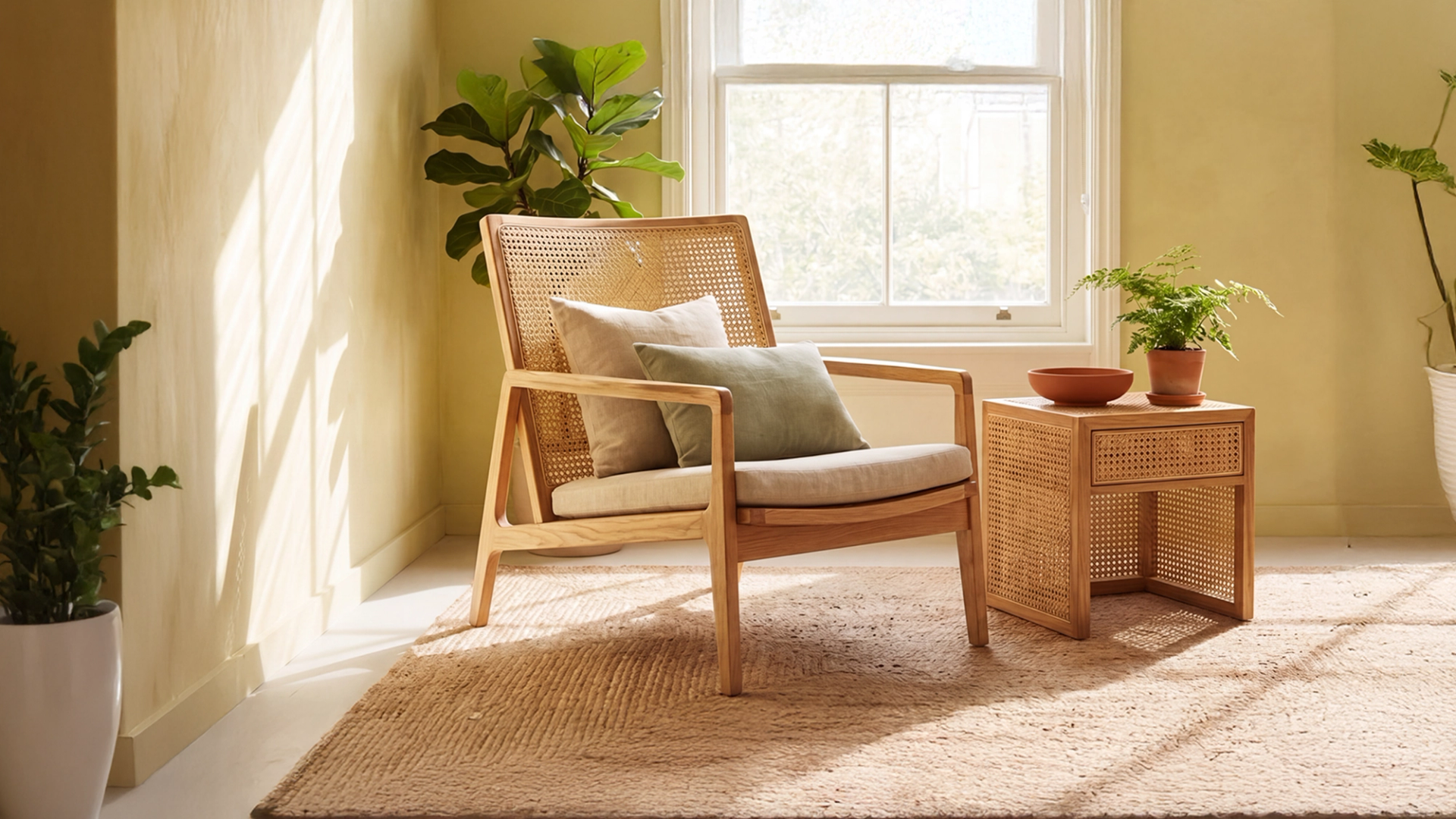
As sustainability becomes a defining criterion in architecture and interior design, furniture materials are being examined more critically than ever before.
Beyond aesthetics and comfort, designers and homeowners are asking harder questions about sourcing, material efficiency, lifespan, and environmental impact.
Within this context, sustainable cane furniture has emerged as a compelling alternative to conventional wood, plastic, and metal furniture, not because it is fashionable, but because of how the material behaves across its entire lifecycle.
Cane furniture is not a recent invention repackaged as a green trend. It is rooted in centuries-old craft traditions, particularly across South and Southeast Asia, where cane has long been used as a practical, renewable material for interiors.
What makes cane furniture relevant today is that its inherent properties align closely with contemporary principles of sustainable design: renewable sourcing, low-intensity processing, material efficiency, repairability, and long service life.
In evaluating cane furniture’s sustainability, this article considers material origin, processing intensity, repairability, and end-of-life behaviour, rather than marketing-led environmental labels.
Key Takeaways
- Sustainable cane furniture is defined by how the material performs across its lifecycle, not by surface-level eco labels
- Cane is a renewable, non-timber forest material that avoids tree felling and supports regenerative harvesting
- Its lightweight yet tensile structure enables material efficiency without sacrificing durability
- Cane furniture is typically produced through low-intensity, craft-led processes rather than energy-heavy industrial manufacturing
- Repairability, including re-caning and modular replacement, extends product life and reduces furniture waste
- When responsibly sourced and finished, cane aligns environmental responsibility with cultural and social sustainability in interiors
What is Cane Furniture and How Does it Differ from Bamboo and Rattan?
Before discussing sustainability, it is important to clarify terminology. In everyday usage, cane, rattan, bamboo, and wicker are often used interchangeably, but they refer to different things.
Cane is derived from the outer skin of the rattan palm, a climbing plant that grows abundantly in tropical forest regions.
Rattan refers to the full stem of the palm, while cane specifically denotes the processed outer layer used for weaving furniture surfaces.
Wicker, on the other hand, is not a material at all but a weaving technique that can involve cane, rattan, bamboo, or even synthetic fibres.
This distinction matters because sustainability claims depend heavily on material origin and processing.
Cane, as used in furniture, is classified as a non-timber forest product, meaning it does not require trees to be cut down for harvesting. This alone places cane furniture in a different ecological category from solid wood furniture.
Cane as a Sustainable Furniture Material
Sustainable furniture materials are assessed not only by what they are made from, but by how efficiently they are sourced, processed, used, repaired, and eventually discarded.
When responsibly sourced and finished, cane furniture performs strongly across each of these dimensions.
Unlike hardwoods that require decades of growth before harvesting, rattan palms regenerate relatively quickly and can be harvested without destroying the host forest ecosystem.
As a climbing plant, rattan relies on surrounding trees for support rather than replacing them.
This regenerative harvesting model supports a continuous supply without the ecological disruption associated with logging.
From a design perspective, cane offers a rare combination of flexibility, tensile strength, and lightness.
These properties allow furniture to be built with less material while maintaining structural integrity, which is a core principle of material efficiency in sustainable design.
Why Sustainable Cane Furniture Performs Better Across the Lifecycle
1. Renewable and Non-Timber Sourcing
One of the most significant advantages of sustainable cane furniture is its origin as a renewable non-timber forest product.
Because cane is sourced from rattan palms rather than felled trees, its extraction places far less pressure on forest ecosystems.
Harvesting does not require clear-cutting or heavy mechanised logging, which are major contributors to biodiversity loss in timber production.
This makes cane a particularly relevant material for regions such as India, where forest conservation and sustainable rural livelihoods are closely linked.
2. High Strength With Low Material Consumption
Cane possesses high tensile strength relative to its weight, allowing furniture frames and surfaces to be constructed with thin sections rather than bulky components.
This structural efficiency means less raw material is required per unit of furniture compared to solid wood or metal alternatives.
From a sustainability perspective, using less material to achieve the same functional outcome reduces overall resource consumption while also making furniture easier to move, transport, and reconfigure in interior spaces.
3. Low-Intensity Manufacturing Processes
A significant contributor to the environmental footprint of furniture is its manufacturing process.
Cane furniture is traditionally produced using manual or semi-manual processes such as heat-bending, weaving, and binding.
These techniques rely more on skilled labour than on energy-intensive machinery.
The research highlights that cane furniture production uses simple tools and limited mechanisation, resulting in lower processing intensity and reduced industrial waste compared to mass-manufactured furniture systems.
This aligns closely with sustainable production principles that prioritise human skill over industrial excess.
4. Repairability and Extended Product Life
Durability alone does not make furniture sustainable. The ability to repair, adapt, and extend its useful life is equally important. Cane furniture performs particularly well in this respect.
Damaged cane surfaces can often be repaired or re-caned without discarding the entire piece.
Frames can remain in use while woven sections are replaced, allowing furniture to evolve rather than becoming waste.
This repairability supports circular use patterns and reduces the need for frequent replacement, a key contributor to furniture waste globally.
5. Compatibility With Biodegradable Furniture Systems
Cane is a natural plant fibre and, under appropriate conditions, can biodegrade at the end of its lifecycle.
This makes sustainable cane furniture fundamentally different from plastic-based furniture, which persists in the environment for decades.
It is essential to note that finishes, varnishes, and adhesives can impact biodegradability.
Responsibly finished cane furniture, particularly pieces that preserve the natural surface of the material, offers greater compatibility with biodegradable furniture systems than heavily treated alternatives.
6. Cultural and Social Sustainability in Indian Furniture Traditions
Sustainability extends beyond environmental metrics to include social and cultural dimensions.
Cane furniture has deep roots in traditional Indian furniture practices, where craft knowledge has been passed down through generations of artisans.
The continued use of cane supports local craft economies and preserves material intelligence that is increasingly rare in industrial design systems.
By integrating traditional Indian furniture techniques into contemporary interiors, cane furniture bridges heritage and modernity while sustaining skilled livelihoods.
7. Lightweight Design and Reduced Secondary Impacts
The lightweight nature of cane furniture has secondary sustainability benefits that are often overlooked.
Lightweight furniture requires less transportation energy, is easier to handle during installation, and adapts more readily to changing spatial needs.
In residential and hospitality projects, this flexibility reduces the likelihood of premature replacement and supports adaptive reuse of interiors, both of which contribute to more sustainable design outcomes.
Cane Furniture Compared to Other Furniture Materials
When evaluated alongside other common furniture materials, sustainable cane furniture offers a balanced combination of renewability, repairability, and low processing impact.
Cane differs from solid wood in that it avoids tree felling and heavy machining. It contrasts with plastic furniture by offering biodegradability and the potential for repair.
Compared to metal furniture, cane requires significantly less energy during production and is easier to maintain without specialised treatments.
This does not mean cane replaces all furniture materials, but it does offer a materially responsible option where lightweight, breathable, and adaptable furniture is appropriate.
| Feature | Cane Furniture | Solid Wood | Plastic | Metal |
|---|---|---|---|---|
| Source | Renewable, non-timber | Tree-based | Fossil-based | Mineral-based |
| Weight | Very light | Heavy | Light | Heavy |
| Repairability | High | Medium–High | Low | Medium |
| End-of-life | Biodegradable* | Biodegradable | Non-biodegradable | Recyclable |
| Processing intensity | Low | Medium | High | High |
What Truly Determines Whether Cane Furniture is Sustainable
Not all cane furniture is automatically sustainable. As with any material, outcomes depend on sourcing and finishing choices.
Responsibly made sustainable cane furniture prioritises renewable sourcing, avoids excessive synthetic coatings, uses repair-friendly construction, and respects the material’s natural behaviour.
Poorly made cane furniture that relies on heavy chemical finishes or disposable construction undermines the very advantages that make the material sustainable.
For architects and designers, evaluating cane furniture through a lifecycle lens rather than surface-level labels is essential.
Cane Furniture in Contemporary Sustainable Home Decor
Beyond environmental performance, cane contributes meaningfully to sustainable home decor by enhancing spatial comfort.
Its woven structure allows airflow, its texture softens interiors, and its natural tone integrates easily with modern, minimalist, coastal, and biophilic design schemes.
Because cane furniture balances visual warmth with structural lightness, it reduces the need for excessive decorative layering, supporting more restrained and resource-efficient interior compositions.
Conclusion
Sustainable cane furniture stands out not because it claims to be eco-friendly, but because its material logic aligns naturally with the principles of sustainable design.
As a renewable non-timber forest product, cane minimises ecological disruption at the source.
Through lightweight strength, low-intensity manufacturing, repairability, and cultural continuity, it offers a responsible alternative to furniture systems built on extraction and disposability.
For architects, designers, and homeowners seeking sustainable furniture materials that combine performance, longevity, and integrity, cane represents a material choice grounded in both tradition and sound environmental reasoning.
Frequently Asked Questions
1. Is cane furniture environmentally friendly?
Cane furniture can be environmentally friendly when it is responsibly sourced and finished. Cane is derived from rattan palms, a renewable non-timber forest product, and typically requires low-intensity processing. Its repairability and long service life further support environmentally responsible use.
2. How sustainable is cane compared to wood?
Compared to solid wood, cane is generally more sustainable because it does not require tree felling and uses less raw material due to its lightweight, high-tensile structure. Cane furniture is also easier to repair and re-cane, which helps extend product lifespan and reduce material waste.
3. Does cane furniture last long?
Yes, cane furniture can last for decades when properly maintained. Its durability lies in its tensile strength and flexible structure, while damaged woven sections can often be repaired or replaced without discarding the entire piece.
4. Is cane furniture suitable for modern homes?
Cane furniture is well-suited to modern homes due to its lightweight construction, natural texture, and adaptability across interior styles. It integrates easily with contemporary, minimalist, coastal, and biophilic design schemes while supporting sustainable material choices.
Casa Carigar
From the Casa Carigar workshop